
Waitaha Hydro Scheme
Comprehensive freshwater ecology assessment, effects management, and expert evidence for a run-of-river hydro scheme on the West Coast’s Waitaha River. Spans 20 years of investigation, from initial surveys through to consent approval.
2007–present (ongoing)
context
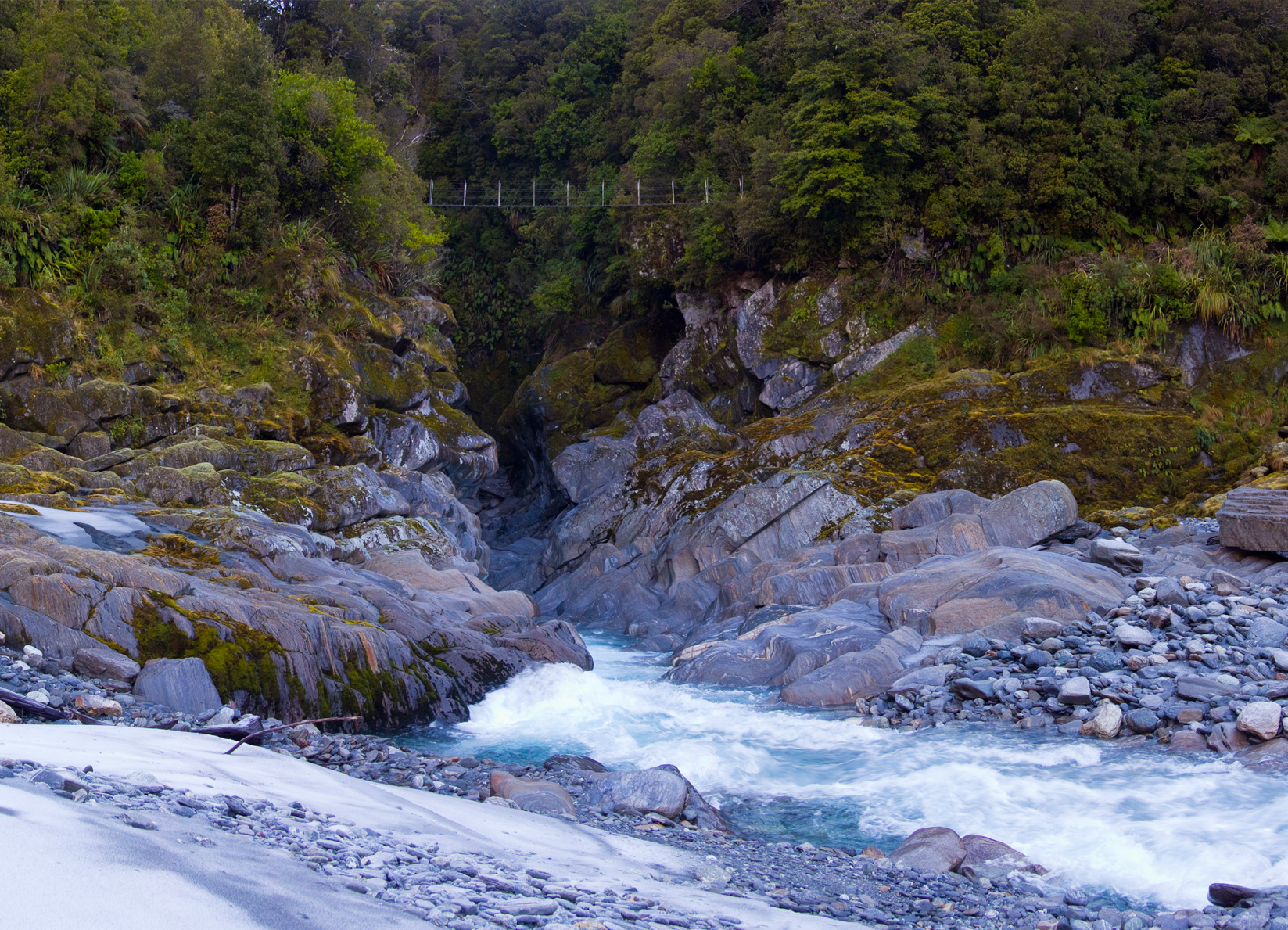
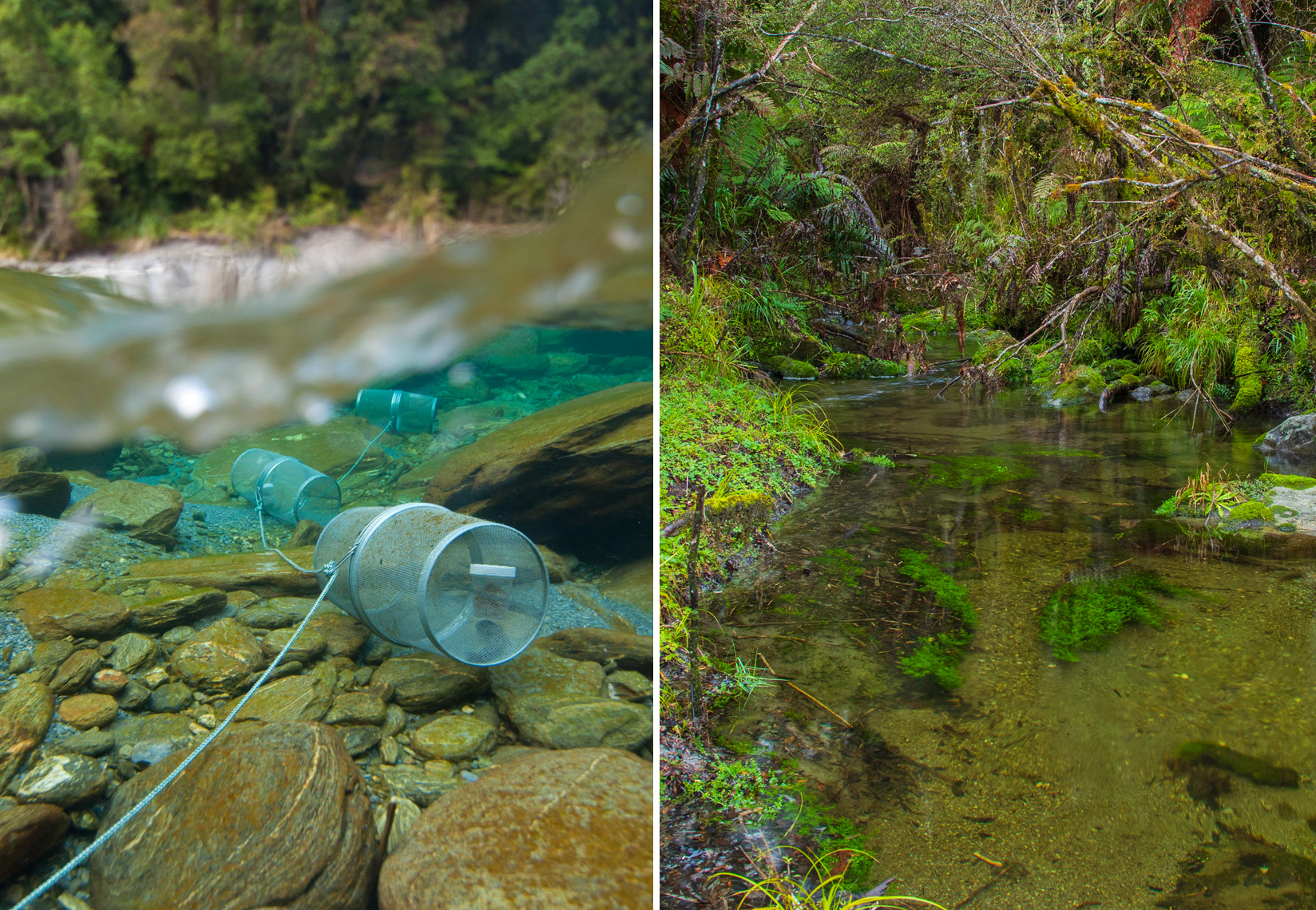
The Waitaha River is a West Coast river with a 315 km2 glacial-fed catchment. It has one of the highest natural flood flow frequencies in the country and annual rainfall reaching 12–14 m. The freshwater fauna that call this river home have been shaped by these conditions, with only those species adapted to high-disturbance, glacial-fed environments persisting, whilst distinctive biodiversity hotspots exist within some of the catchment’s hidden stable tributaries.
The Waitaha River is a taonga of Poutini Ngāi Tahu (Te Rūnanga o Makaawhio and Te Rūnanga o Ngāti Waewae). Westpower, in close partnership with Poutini Ngāi Tahu, proposes a run-of-river hydro scheme diverting up to 23 m3/s via a weir at Morgan Gorge through a pressurised tunnel to a power station 2.5 km downstream.

challenge
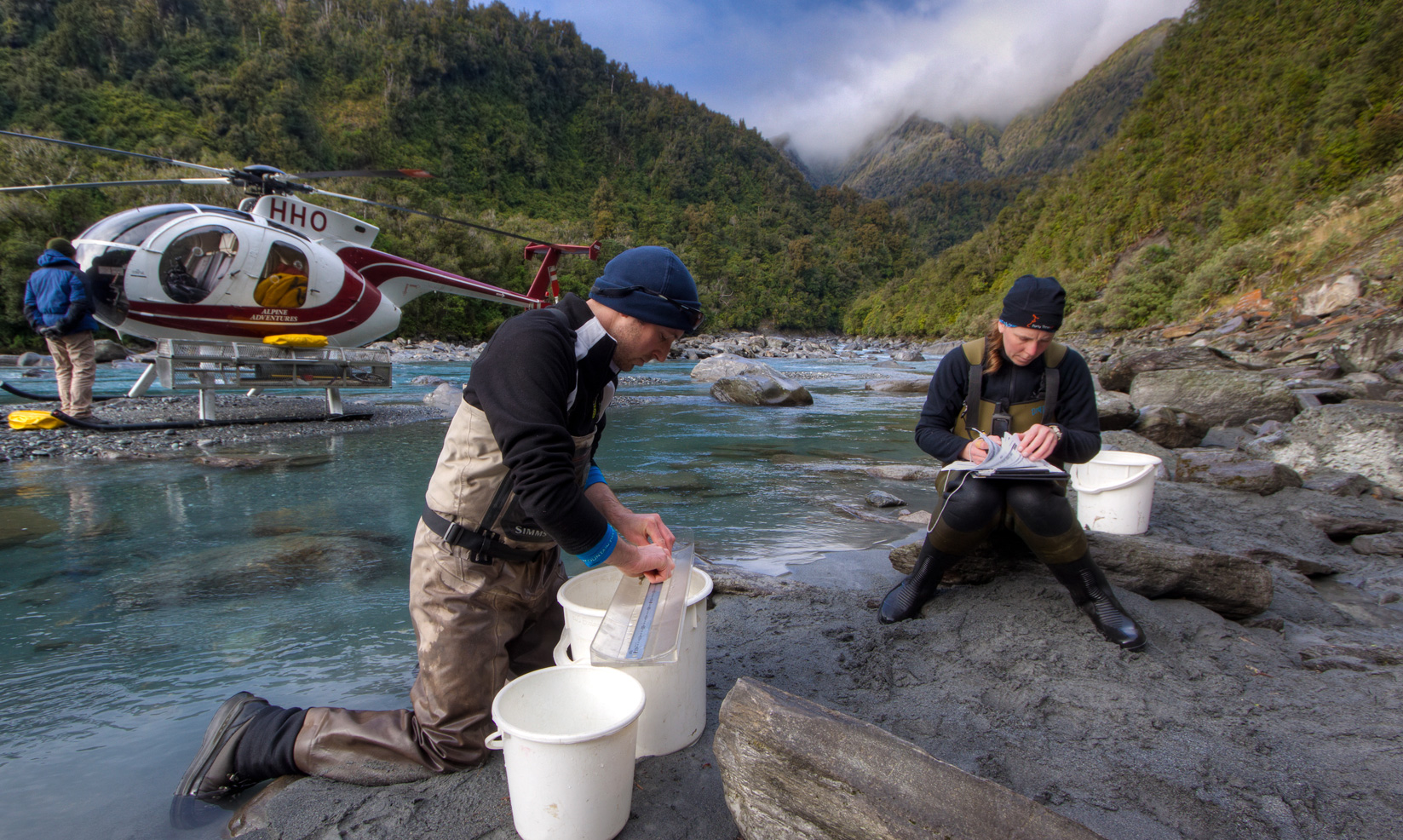
- Characterising ecological values across a remote, high-disturbance, glacial-fed, non-wadeable river and wider catchment that presented substantial physical and logistical challenges to sampling. Building a comprehensive and defensible evidence base required multiple survey campaigns from 2007–2024, spanning mainstem and tributary habitats within and outside the Scheme footprint, integrating conventional freshwater ecology and eDNA sampling methods, and developing site-specific Instream Flow Incremental Methodology (IFIM) outputs based on detailed invertebrate and habitat sampling throughout the river mainstem.
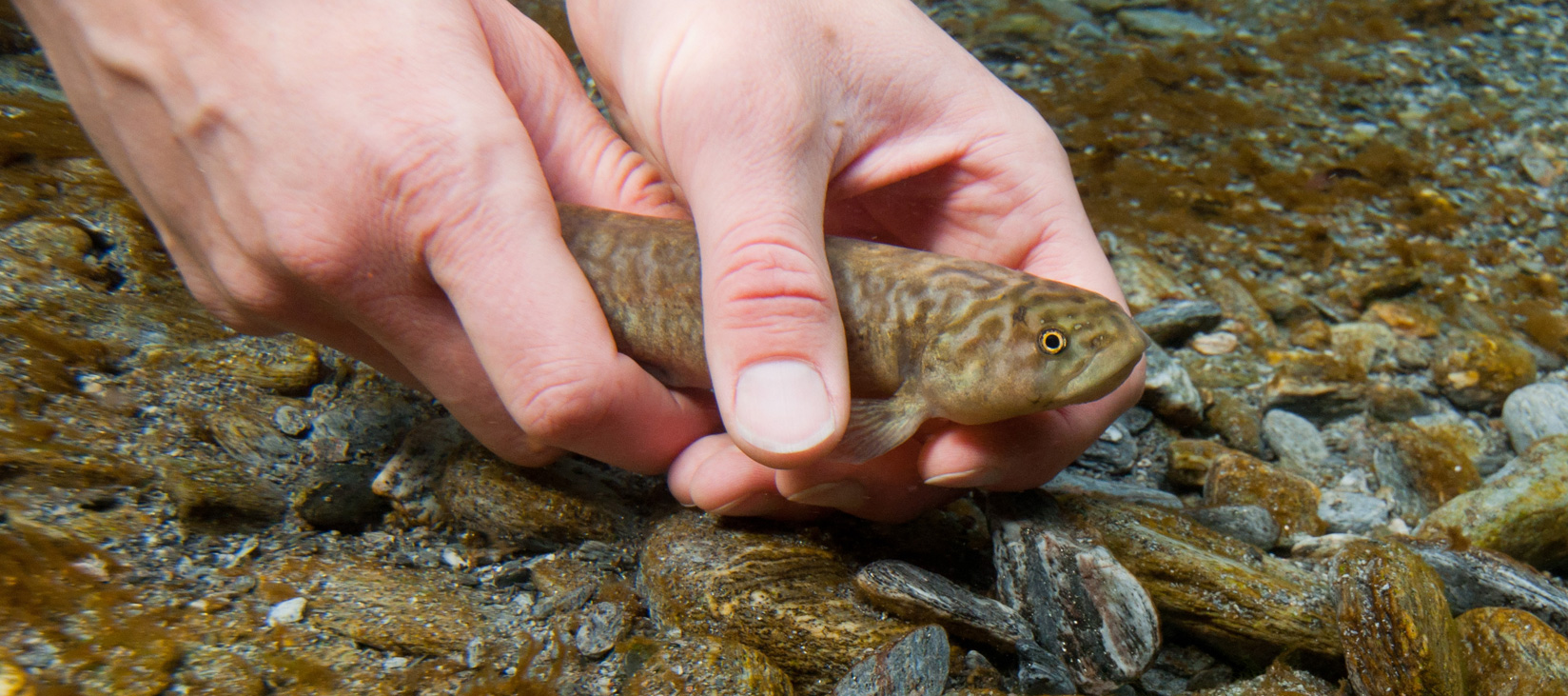
- Morgan Gorge acts as a natural barrier to all fish except kōaro. The intake weir design must preserve kōaro passage upstream while maintaining the exclusion of other fish species.
- Protecting the ‘Stable Trib’ from construction and operational effects. This site was identified as a biodiversity hotspot, featuring distinct invertebrate communities, significant lamprey rearing habitat, and the only recorded presence of kōura/freshwater crayfish.
our role
EOS Ecology has been Freshwater Ecology Lead since 2007 – from the initial scheme optioneering and the earliest freshwater ecology surveys through to the AEE, Freshwater Ecology Management Plan, and expert evidence for the 2026 Fast-track hearing. Our role spans the full ecological evidence base: comprehensive surveys across the catchment, significance assessment against regional and national policy, effects assessment for construction and operations, Freshwater Ecology Management Plan development, and response to independent technical review via the Fast-track process.
how we approached it
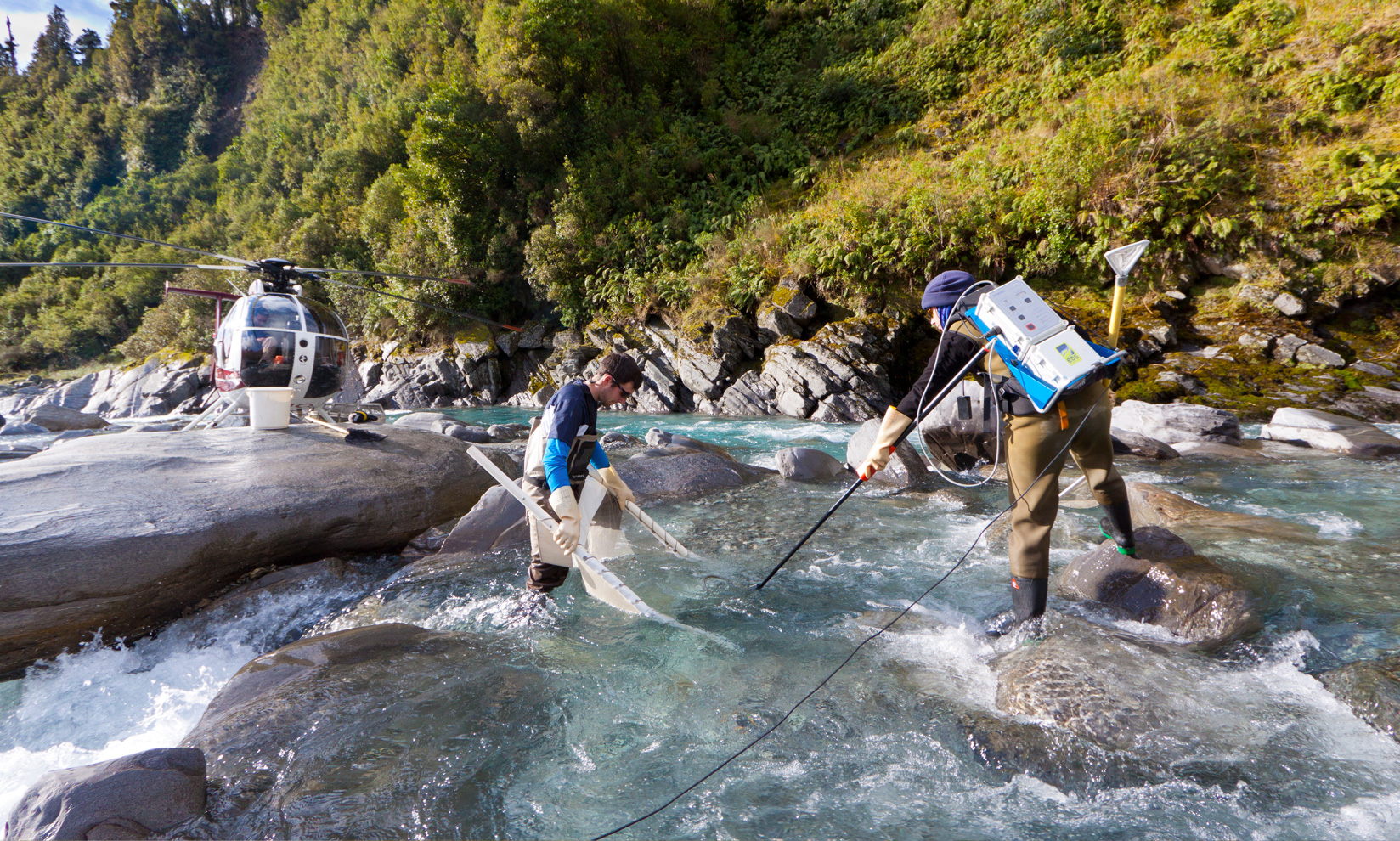
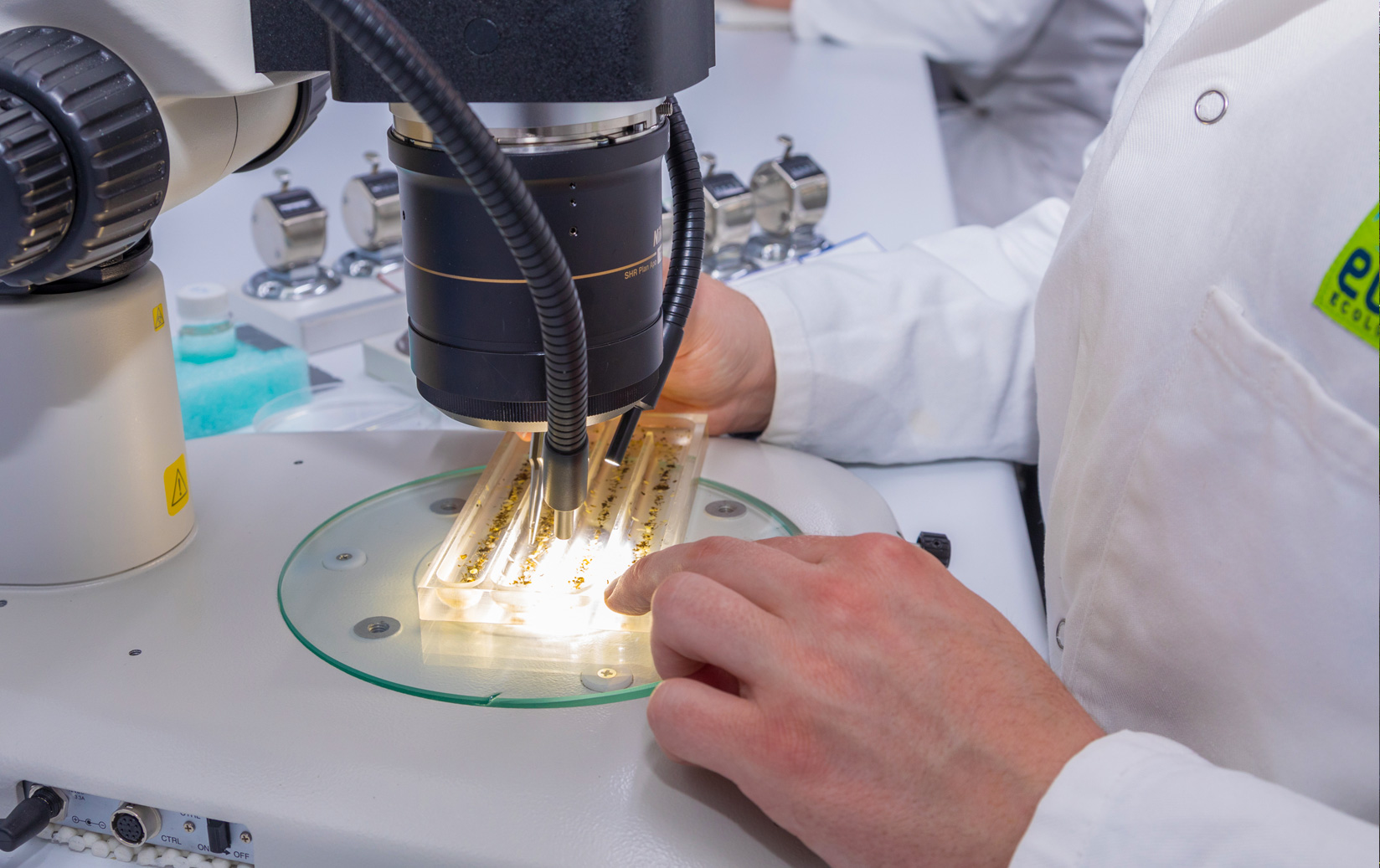
- Built an 18-year evidence base through fish surveys at 48 sites (electrofishing, fyke netting, spotlighting), invertebrate, periphyton, and water quality sampling at 31 sites (including 308 quantitative invertebrate samples), and supplementary eDNA sampling at 20 sites using technology unavailable during the original surveys. Critical interpretation of eDNA data was essential – expert site knowledge identified a weak salmon signature recorded in a seepage habitat with no surface water connection as a false positive, demonstrating that eDNA results require ecological context to be defensible. With such a comprehensive dataset we were able to compare the ecology of this catchment against national datasets, and were also able to confirm that Morgan Gorge is a barrier to the upstream movement of all fish bar kōaro.
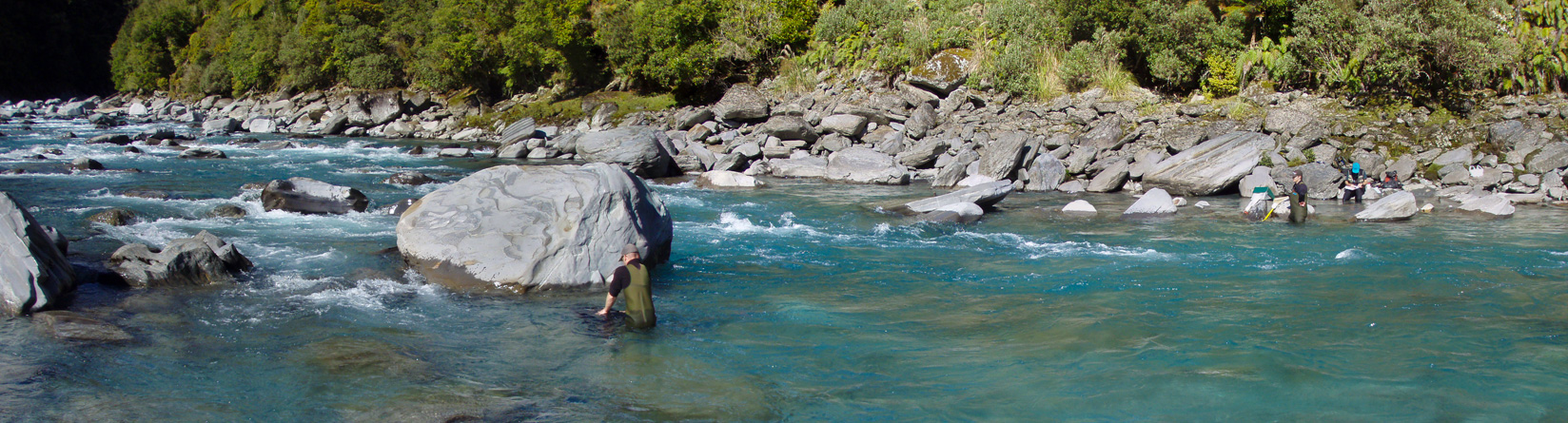
- Implemented a habitat and invertebrate sampling programme that collected data on the river mainstem to develop site-specific habitat suitability indices, enabling more locally relevant IFIM outputs. This required ‘out of the box’ thinking for how to implement a transect-based survey across a deep, high velocity environment with substrate that varied from bedrock to boulder to gravel.
- Assessed the Waitaha’s ecological significance against ten policy criteria, and evaluated construction and operational effects across 16 categories.
- Authored the Freshwater Ecology Management Plan (FEMP) setting out construction protocols, operational procedures for residual flow and shutdowns, compliance monitoring, and adaptive management provisions for supporting the freshwater values of the Scheme.
- Responded to independent peer reviews as part of the Fast-track process and presented expert evidence at the Fast-track empanelment. Also contributed to a series of community engagement evenings across the West Coast, presenting the ecological aspects of the Scheme to the wider community.

outcome
The Scheme was approved under the Fast-track Approvals Act. The expert review process resulted in general agreement from independent reviewers on matters of fish ecology, fish passage and fish passage design criteria for the Scheme’s main infrastructure, and the adequacy of consent conditions to maintain ecological values. The 18-year evidence base, built across multiple survey campaigns, sampling methods, and evolving technology, provided the defensible foundation that a complex consenting process of this nature demands. The project demonstrates what sustained ecological investigation looks like when it is carried through from initial site surveys to expert evidence – not a snapshot commissioned for a consent application, but a comprehensive understanding of a catchment built over time.
wider impact
- Demonstrates how long-term ecological investigation builds the defensible evidence base required for complex consenting under Aotearoa New Zealand’s evolving regulatory framework, including the Fast-track Approvals Act.
- The kōaro passage design challenge is nationally significant – integrating climbing-specialist fish ecology with hydraulic engineering at an intake structure, with few precedents in Aotearoa New Zealand.