
Dudley Creek Flood Remediation
Ecology-led design ensuring post-earthquake flood remediation also delivered lasting habitat improvement for a residential urban stream.
2015–2018
context
Dudley Creek flows through St Albans in the northern suburbs of Ōtautahi/Christchurch. Following the Canterbury earthquakes, ground subsidence across the Flockton Street area significantly increased flood risk for hundreds of residential properties. Christchurch City Council (CCC) commissioned a major flood remediation programme to restore pre-earthquake flood capacity across 1.6 km of Dudley Creek, St Albans Creek, and Shirley Stream.
The project involved increasing the flood flow capacity of the channels, replacing six culverts, nine private bridges, and one footbridge, plus constructing a 0.8 km bypass pipeline to take peak flood flows. It was a large-scale, multidisciplinary engineering project – but it was also an opportunity. CCC’s ‘six values’ approach to waterway management (drainage, ecology, landscape, recreation, heritage, culture) meant that flood remediation did not have to come at the expense of the stream’s ecological values. Done well, it could improve them.

challenge
- The core goal was flood capacity – widening channels to convey greater flows. But channel widening directly affects instream habitat, riparian vegetation, and the fish and invertebrate communities that depend on them. The challenge was to find designs that achieved flood remediation and ecological improvement simultaneously – not trading one off against the other.
- Dudley Creek is a slow-flowing, heavily silted urban stream with moderately contaminated sediments and poor invertebrate habitat. But its fish community was surprisingly diverse – seven native species, three classified as ‘At Risk – Declining’, including longfin eel and the diminutive bluegill bully found at a high-value riffle section along Banks Avenue. Protecting and enhancing that diversity through three years of in-channel construction required sustained ecological oversight.
- Construction occurred in multiple work packages across 1.6 km of active residential stream. Each phase required fish to be rescued from isolated sections before dewatering, with repeat fishing needed as eels returned to construction sites within days of removal – demonstrating both the fish community’s resilience and the importance of ongoing presence on site.
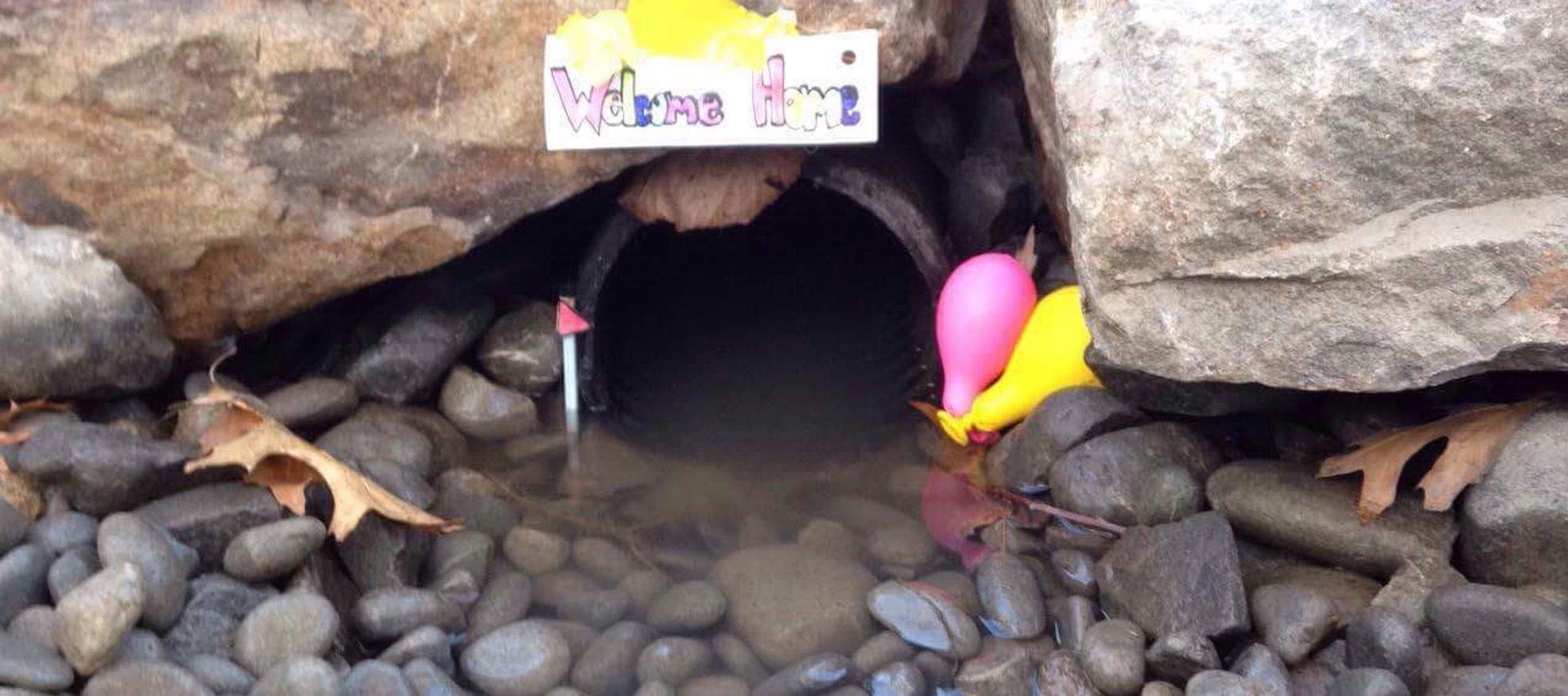
- The community had strong attachment to the stream – residents regularly fed the large eels – and a genuine desire for both flood protection and a healthy waterway. Public engagement needed to be substantive, not perfunctory.
our role
EOS Ecology was the ecology lead for the entire Dudley Creek Flood Remediation programme – from optioneering and scheme selection through concept and detailed design, consenting, and three years of construction oversight. We were responsible for ensuring that a project driven by flood capacity also delivered meaningful ecological improvement: designing habitat features into the engineered channel, assessing environmental effects, rescuing over 1,500 fish across multiple work packages, training contractors in ecological outcomes, and engaging with the local community throughout.
how we approached it
- Led the ecological assessment of existing conditions – baseline surveys of fish, freshwater invertebrates, instream and riparian habitat, water quality, and sediment quality – producing the ecological report that informed both scheme selection and design. Identified seven native fish species and high-value habitat reaches.
- Provided ecological input through the multi-criteria assessment process for downstream option selection, then worked within the multidisciplinary design team to embed ecological criteria into the detailed channel design.
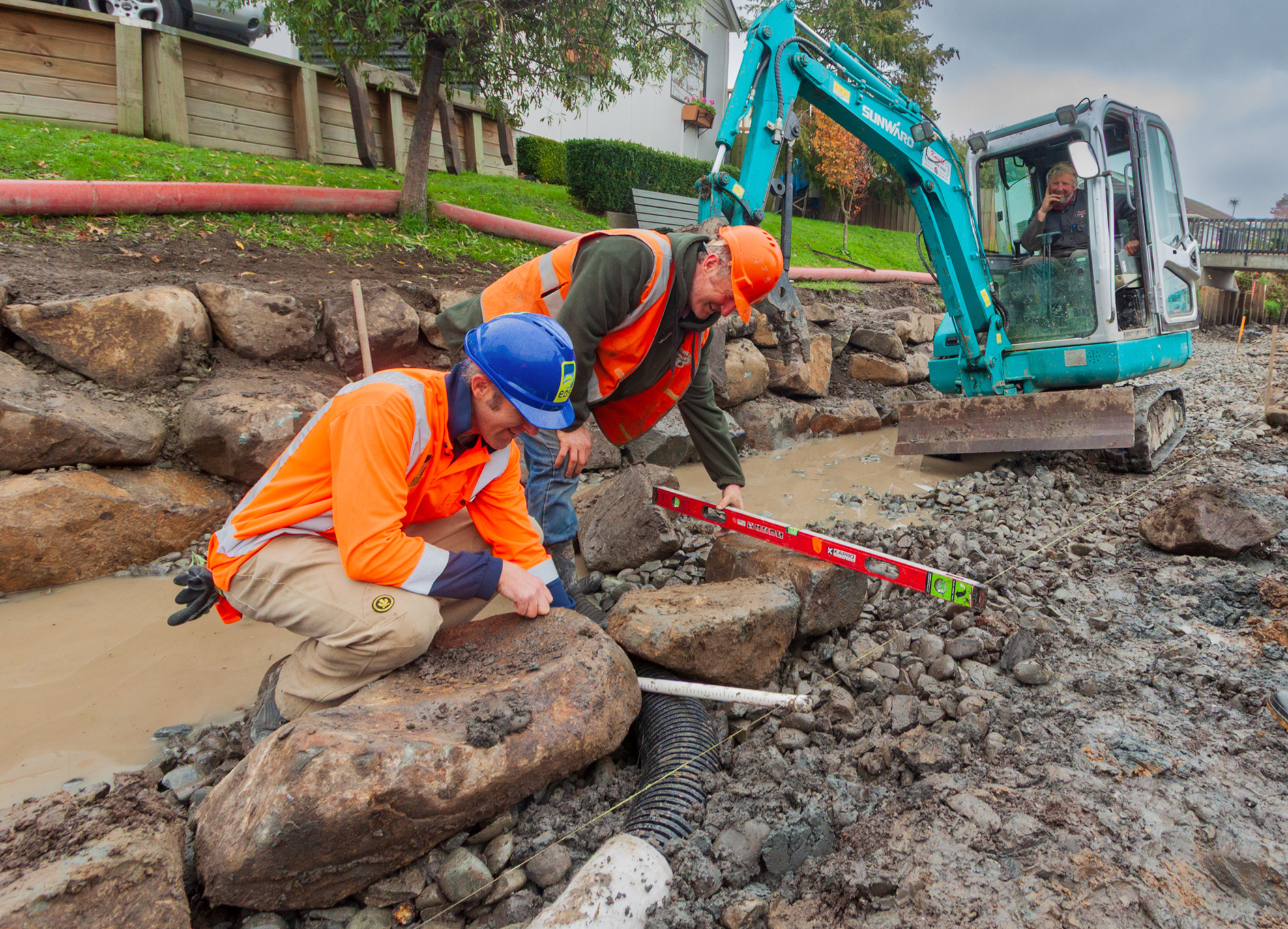
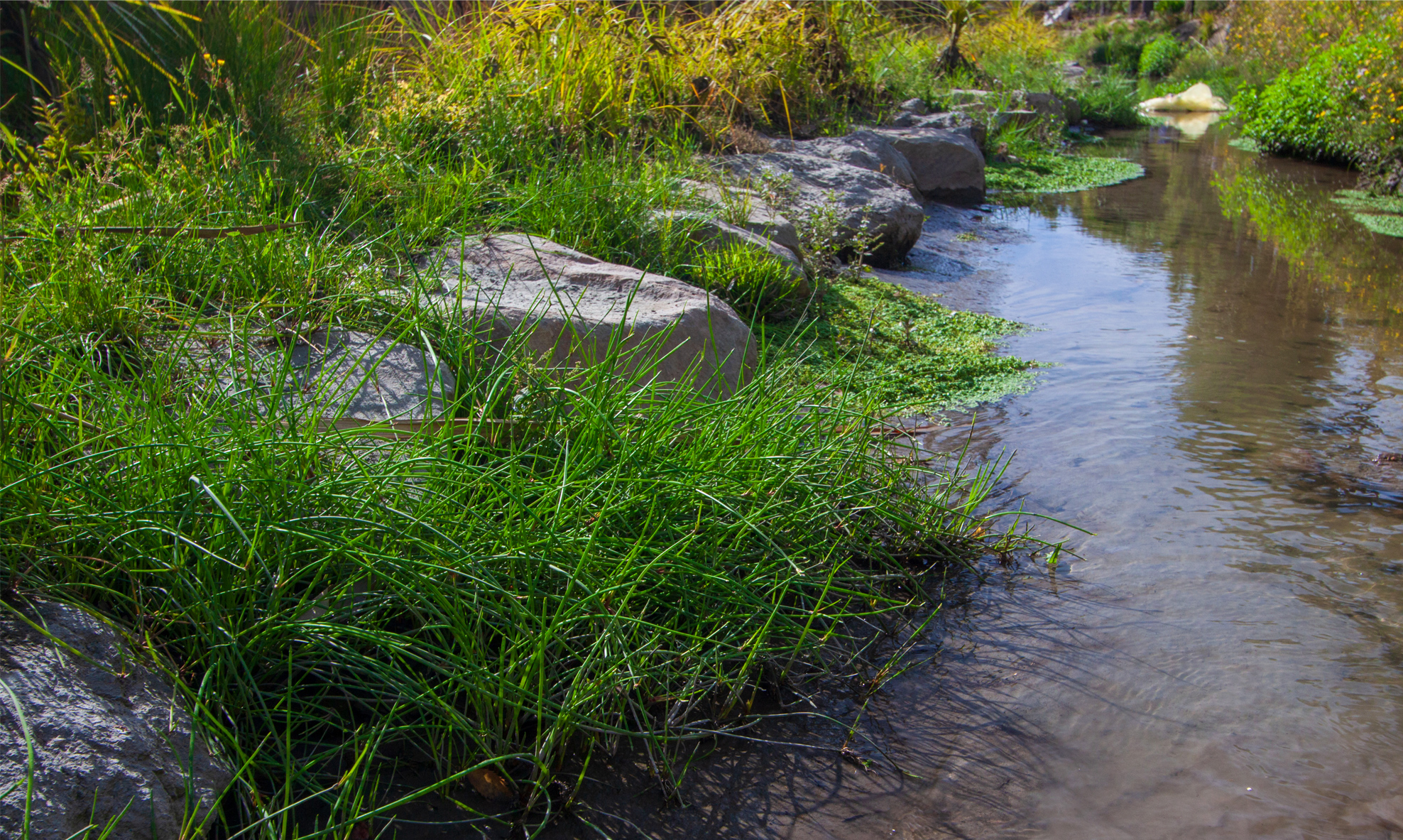
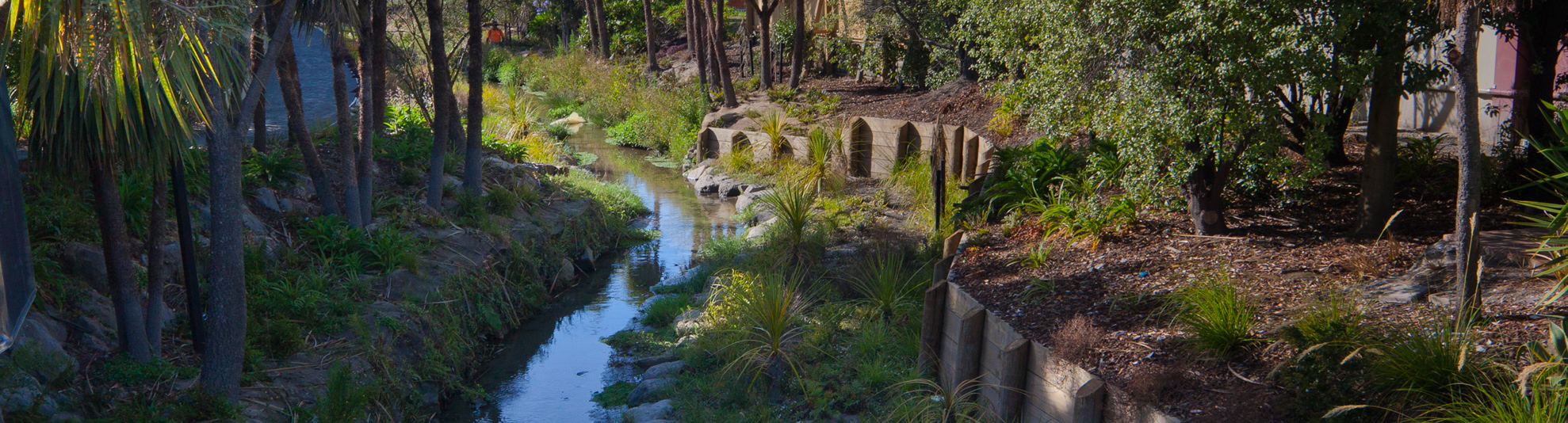
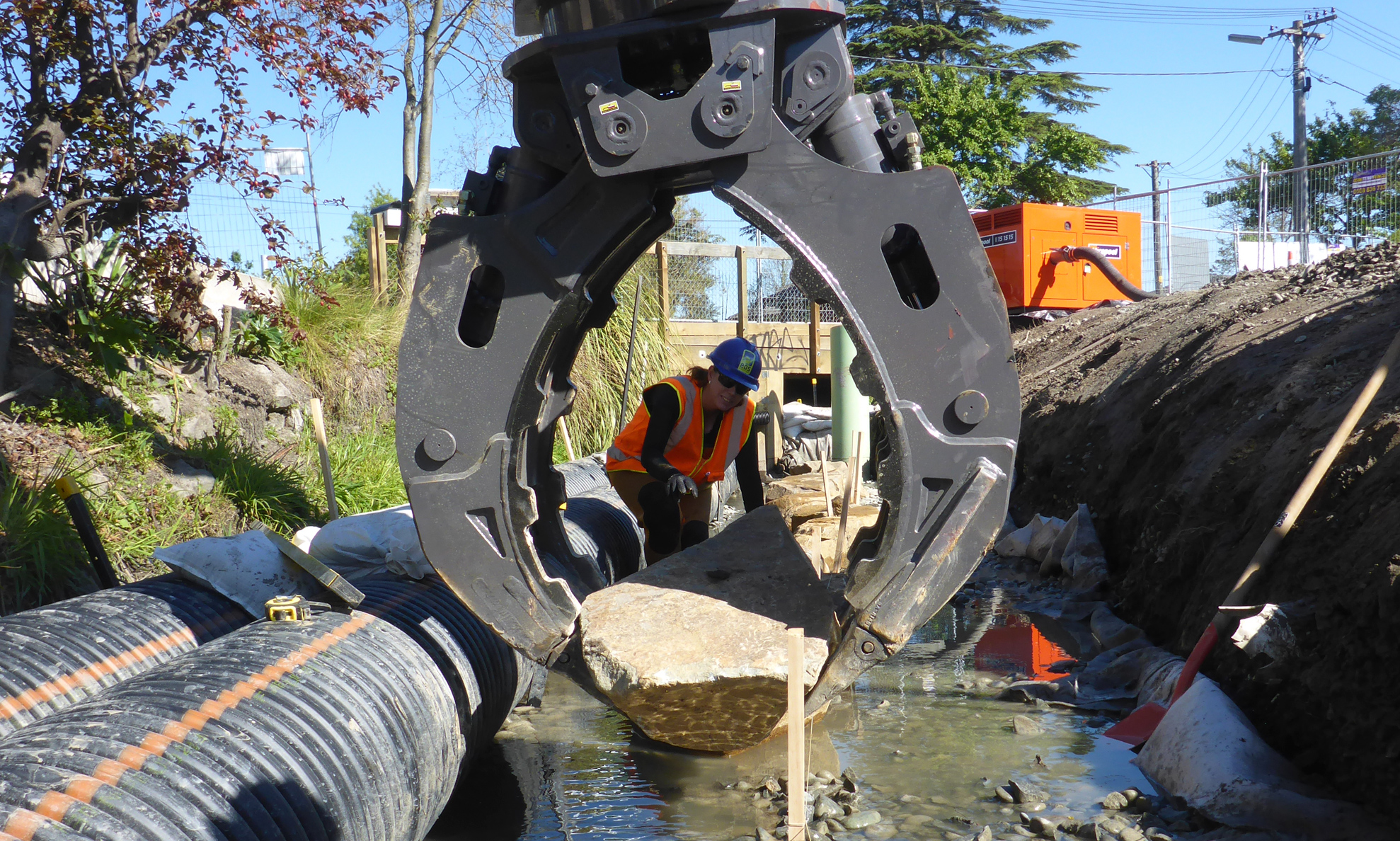
- Designed instream habitat features to improve ecological values, including a narrowed low-flow channel with coarse substrate, planted low floodplains providing refuge during high flows, natural rough-edged boulder edge design with holes, crevices, and flexible pipes providing cover for fish (including large eels), instream cobble clusters and log vanes to diversify flow, and culvert design to ensure fish passage. The log vanes were the first of their kind to go into an urban stream in Christchurch.
- Assessed spawning potential to manage construction timing around sensitive periods, identified key tree species for protection including those used for overwintering monarch butterflies, and checked existing culverts for welcome swallow nesting – providing design criteria for replacement culverts that maintain nesting habitat for this native bird.
- Provided ecological construction oversight throughout – on-site training for contractors to ensure ecological design features were built as intended, regular quality checks on boulder edging and substrate placement, and ongoing guidance to achieve the best possible ecological outcomes.
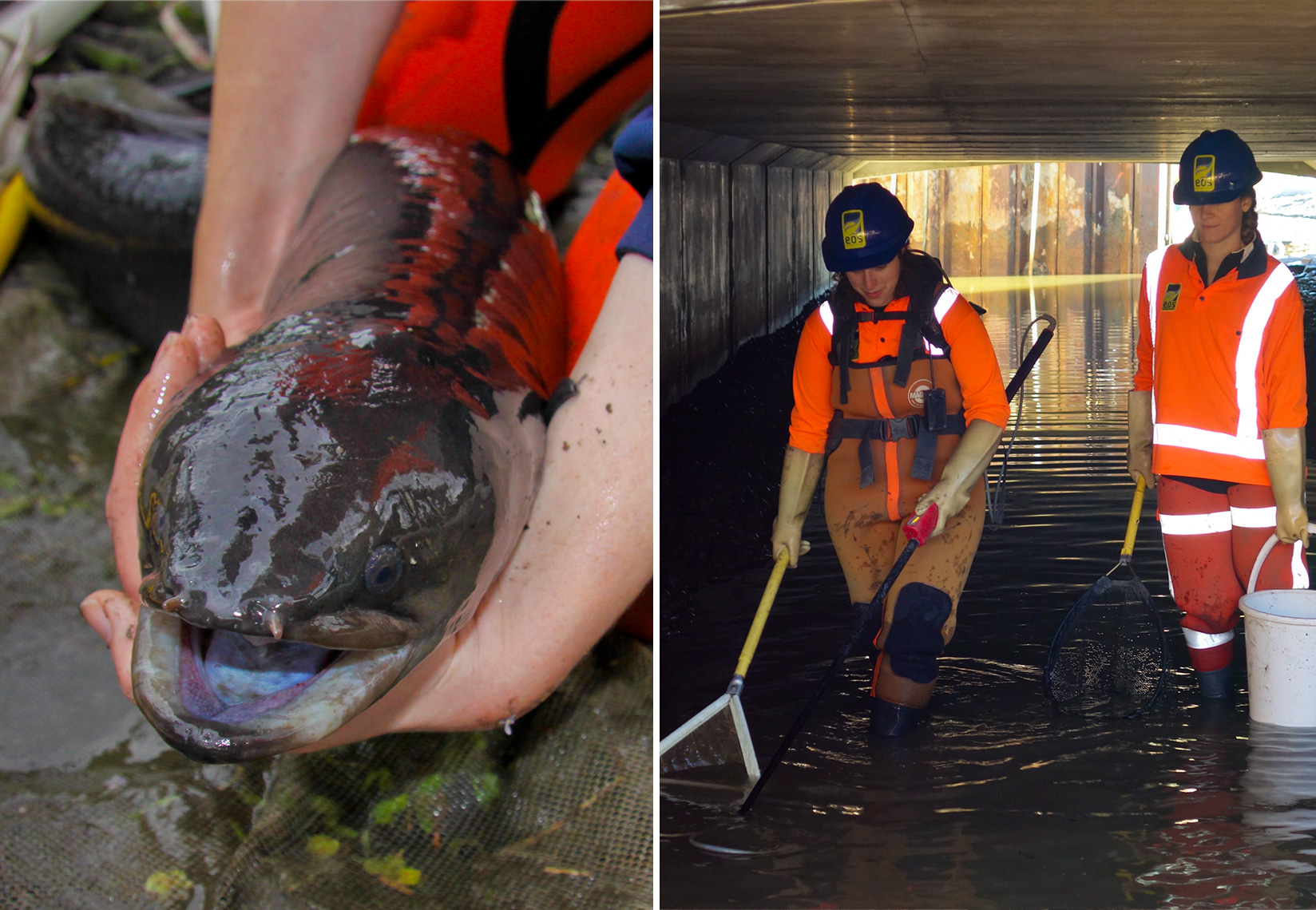
- Managed fish rescue and relocation across all construction work packages – over 1,500 fish rescued via electrofishing across the programme, identified to species and measured, then relocated to suitable habitat upstream or downstream of the works. Observations during repeat fishing confirmed that larger eels were returning to construction sites within days, informing adaptive management of the rescue programme.
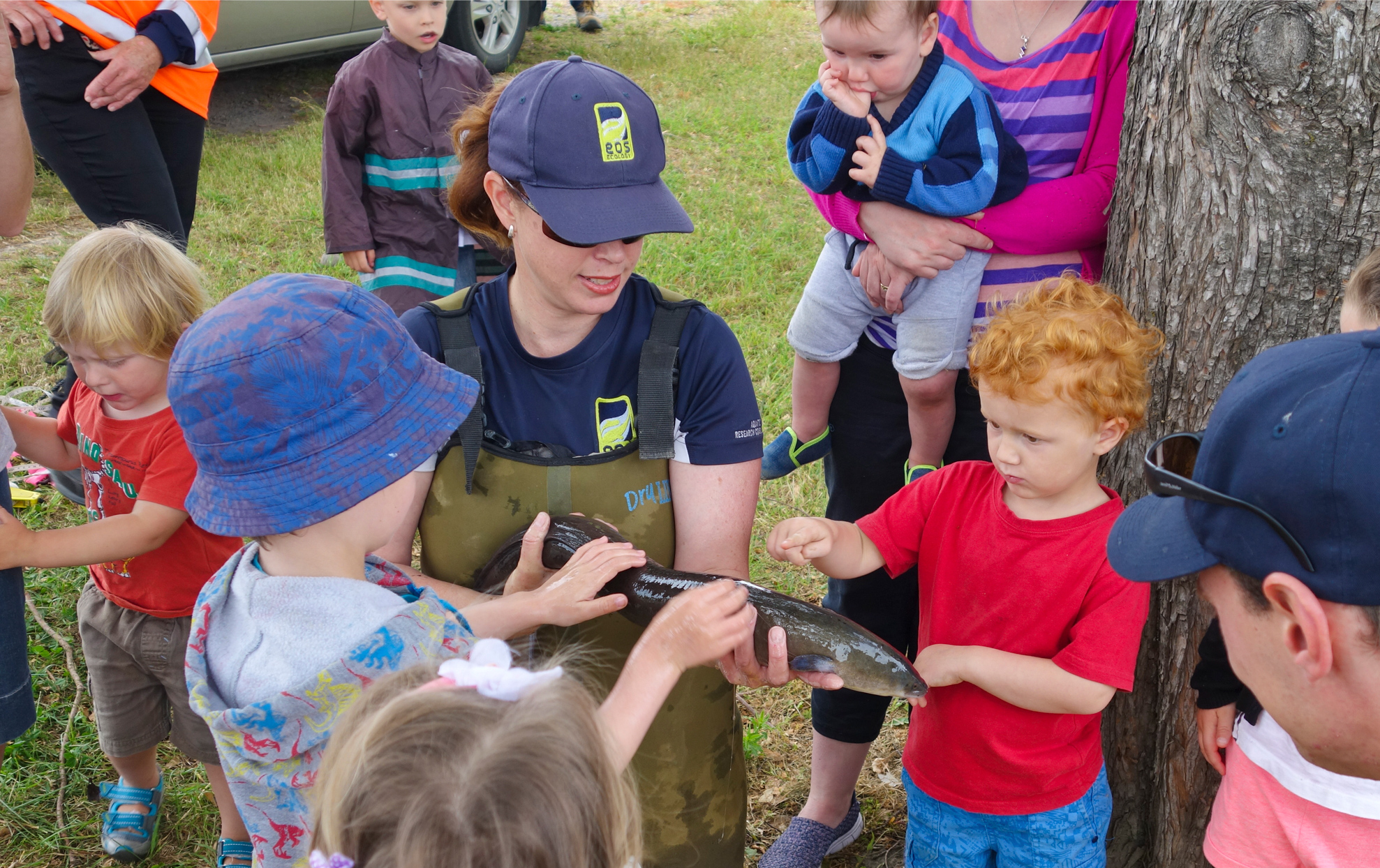
- Designed and delivered community engagement materials, including public consultation posters, interpretation panels, and a pre-school engagement programme with ‘Healthy Streams’ colouring activities, a fishing day, and invertebrate sampling demonstrations.

outcome
The Dudley Creek Flood Remediation programme delivered restored flood capacity for the Flockton Street area while achieving significant habitat improvements to 1.6 km of urban stream. Through sustained ecological input during optioneering, design, and construction, this project demonstrated that flood remediation and ecological enhancement are not competing goals. Given the right design philosophy and the right team of people, they can complement and even strengthen each other.
Completed sections showed native plantings establishing well, with fish observed moving into the enhanced habitat areas. The project won Silver at the ACE (Association of Consulting Engineers) Awards in 2020, recognising the integration of engineering and ecological outcomes across a complex post-earthquake recovery project.
The community response was overwhelmingly positive, with residents valuing both the flood protection and the improved natural and aesthetic character of their stream. The project stands as a practical demonstration of CCC’s six-values approach to waterway management, showing what is achievable when ecology is embedded within the design team from the outset, rather than consulted after the fact.
wider impact
- Established a model for ecology-led input to urban flood remediation – demonstrating that ecological expertise embedded within a multidisciplinary engineering team, from optioneering through to construction oversight, produces measurably better outcomes for both flood capacity and stream health.
- The fish rescue programme – rescued over 1,500 fish across multiple work packages. By developing adaptive repeat-fishing protocols in response to observed eel behaviour, it set a new standard for construction-phase ecological management in urban waterway projects.
- The consultation materials and direct engagement with local schools illustrated the value of meaningful ecological engagement for communities affected by infrastructure projects.