
Te Papa Ōtākaro/Avon River Precinct – Urban River Regeneration
Ecological design leadership for Christchurch’s post-earthquake anchor project – transforming 3 km of degraded urban river into a functioning ecosystem through science-led in-river design and construction oversight.
2012–2015
context
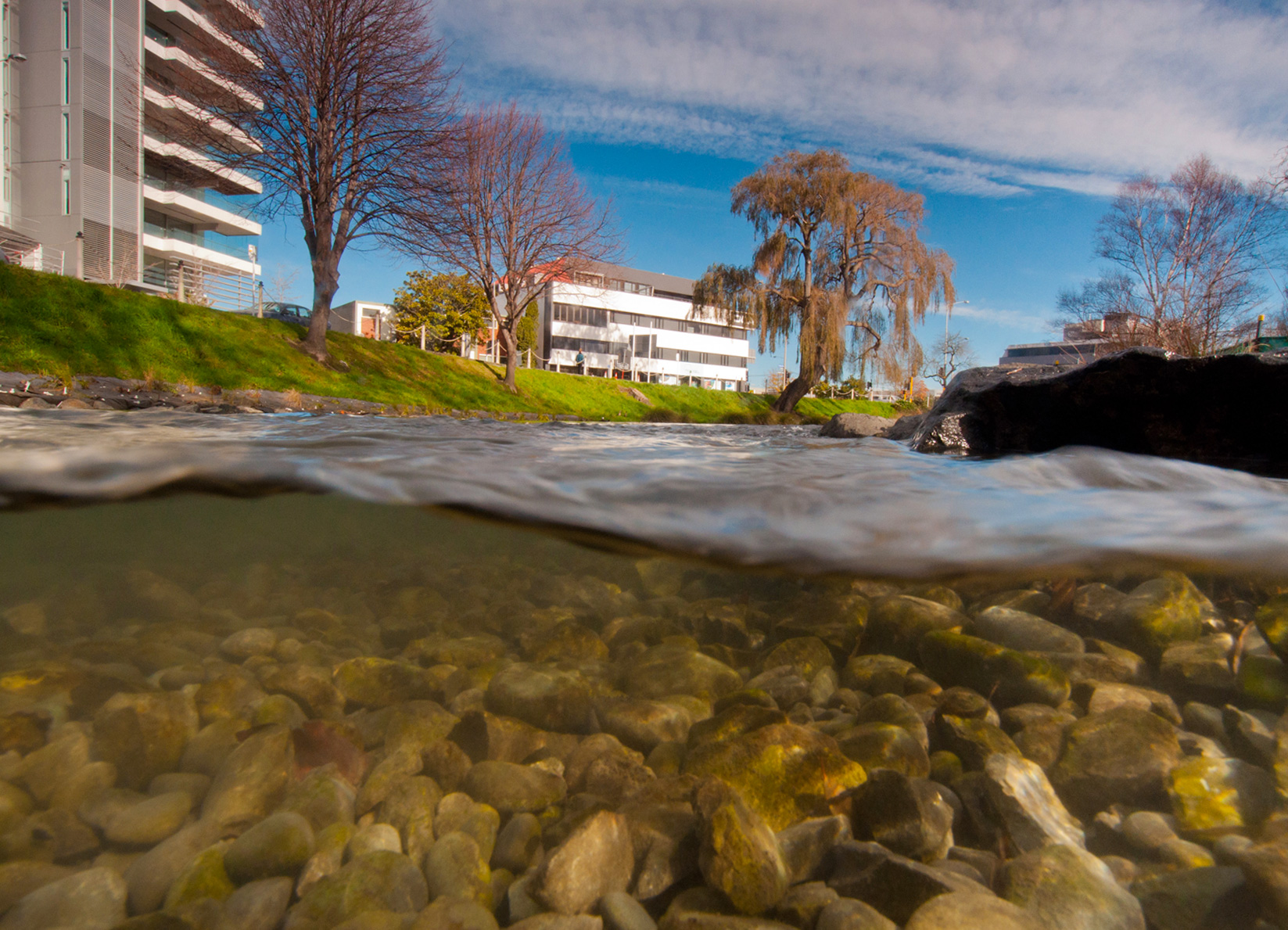
Once a transport route and centre for trading and food gathering for Ngāi Tahu, the Ōtākaro/Avon River is a place of significance for central Christchurch. Yet decades of urban use have degraded the river, with reinforced banks, an over-widened channel and sediment smothering once coarse gravels. The February 2011 earthquake compounded the degradation with widespread liquefaction sand entering the river, but also created an extraordinary opportunity: the clearance of damaged buildings enabled a once-in-a-lifetime reimagining of the 27.7 ha river corridor. Te Papa Ōtākaro/Avon River Precinct (ARP) became the key anchor project of the Christchurch Central Recovery Plan, with the community’s ‘Share an Idea’ engagement (106,000 ideas) placing ecological health at the centre of the rebuild.

challenge
- A degraded urban river – over-widened channel, widespread sedimentation and liquefaction sand smothering habitat, no mid-channel cover, artificial banks, little native vegetation – requiring simultaneous rehabilitation of channel form, substrate, flow dynamics, and riparian vegetation.
- A river and community sensitive to flooding, requiring that any alterations to the riverscape did not increase flood levels – this required careful design and engagement around river flow dynamics.
- Translating a broad community aspiration for a ‘green city’ into specific, buildable ecological interventions for an urban river, with limited Aotearoa New Zealand urban precedent at this scale.
- Constructing within an active urban waterway containing nine native fish species required careful staging and multiple AEEs and onsite guidance to minimise ecological effects during the in-river works.
our role
EOS Ecology was the ecology and in-river design lead for the ARP. We were responsible for the ecological vision, the in-river works design philosophy, all aquatic AEEs, construction oversight, and fish rescues. Working alongside Colin Meurk (Manaaki Whenua Landcare Research) for terrestrial ecology, EOS Ecology developed the science and ecology framework that underpinned the entire river corridor design, from concept to constructed outcome. EOS Ecology’s ecological review and guidance during the concept design phase demonstrated sufficient potential to convince the client to create a dedicated in-river works package – a scope that did not exist in the original programme.
how we approached it
- Produced the comprehensive Ecology Report establishing the ecological baseline and three improvement theme pillars: terrestrial ecosystem health, aquatic ecosystem health, and visual catchment continuity. These pillars were embraced by the wider project and resulted in the creation of a specific in-river works package.
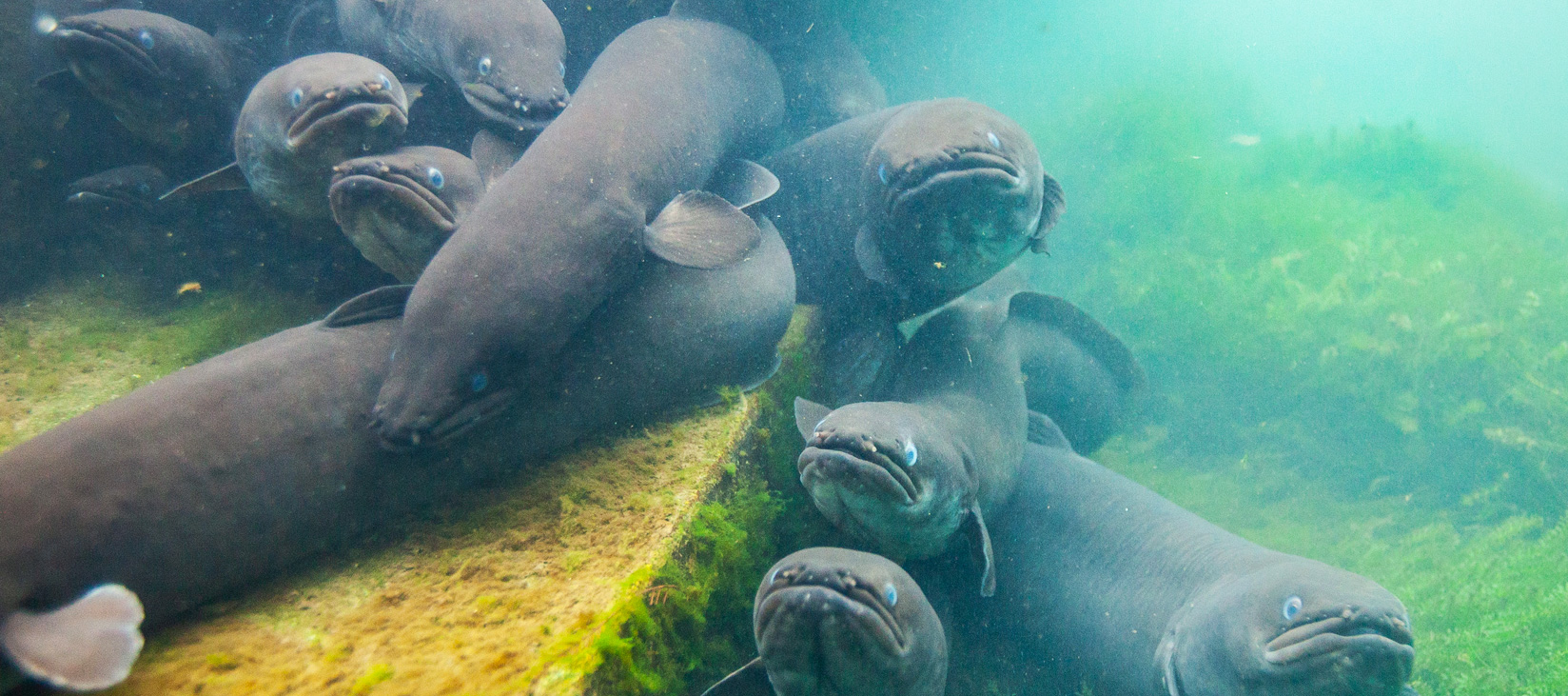
- Developed the In-river Works Package design philosophy and led the in-river design work, translating ecological goals into buildable interventions: channel narrowing via low-bank ‘fresh-plains’, weir-riffle complexes for sediment control and creation of fish spawning habitat, mid-channel features and marginal structures to increase habitat heterogeneity. Also designed the ‘tuna townhouses’ – specially created voids within the concrete steps at The Terraces, providing longfin eel habitat in hard-edged sections of the promenade.
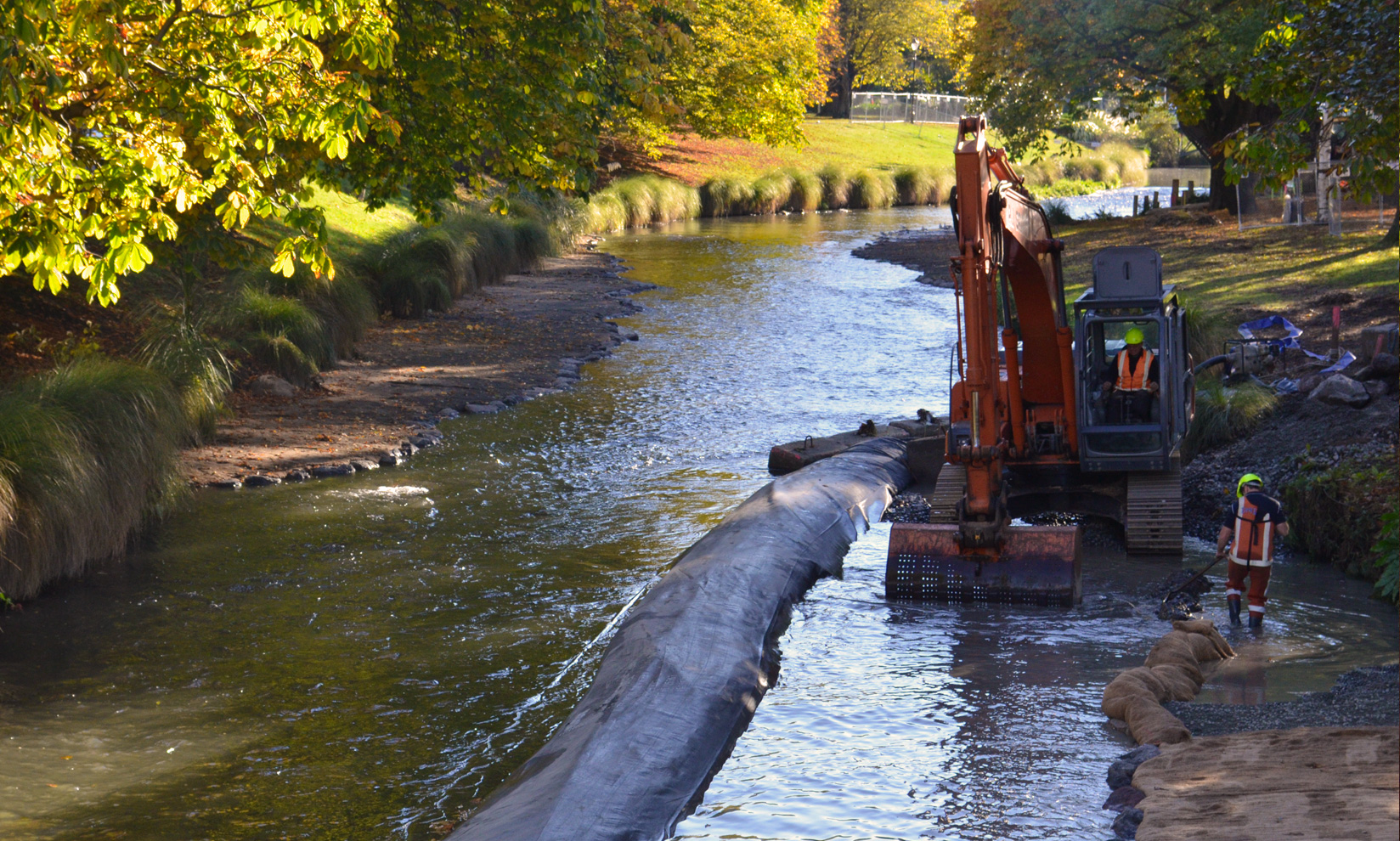
- Designed a bespoke fine sediment removal and long-term management approach: large-scale removal of liquefaction sand and gravel cleaning, followed by the creation of in-river features to trap sediment at key locations interspersed with channel narrowing and gradient modification to increase flow velocities – creating a river that ‘self-cleanses’ rather than requiring ongoing mechanical intervention along its length.
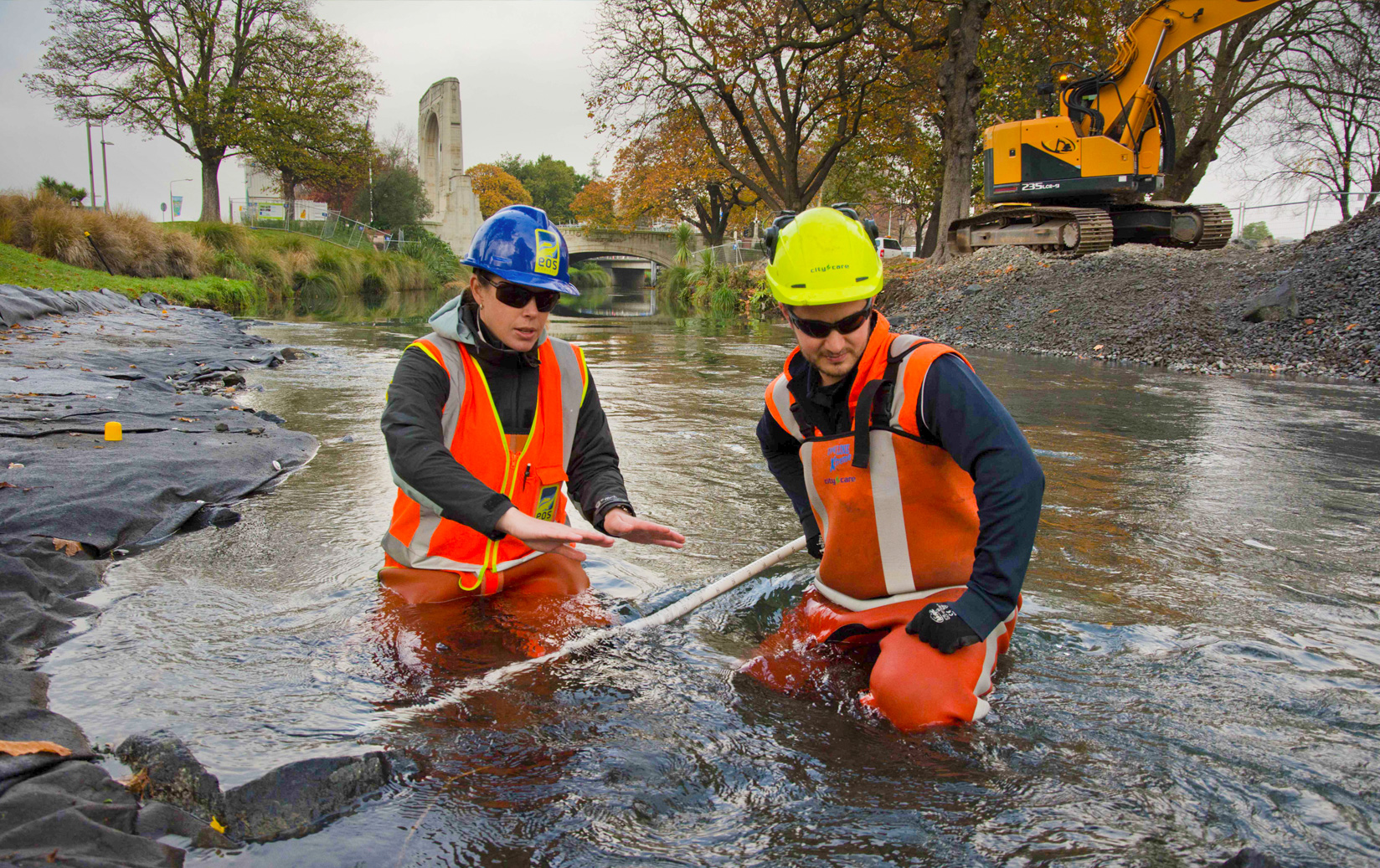
- Authored multiple AEEs, guided the sequential construction phases and developed the In-river Ecologist’s Brief – enabling large-scale in-river works to proceed.
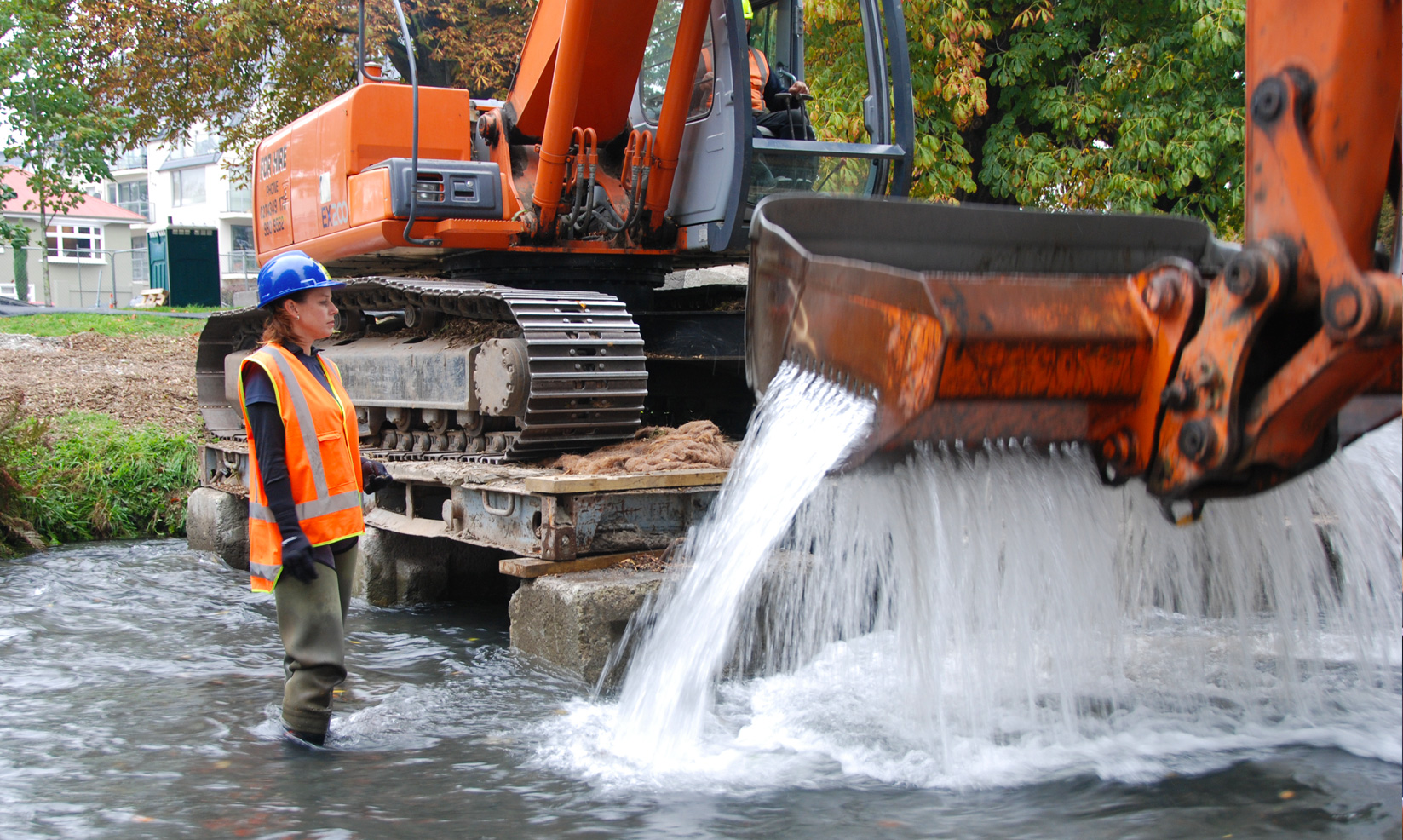
- Provided on-site oversight during Apr–Jun 2014 construction, with real-time design adaptation in response to site conditions. Included the removal of 9,605 tonnes of fine sediment, 15,000 m2 of gravel habitat cleansed, creation of 5,000 m2 of riffle habitat, and 1,100 m of fresh plains built.
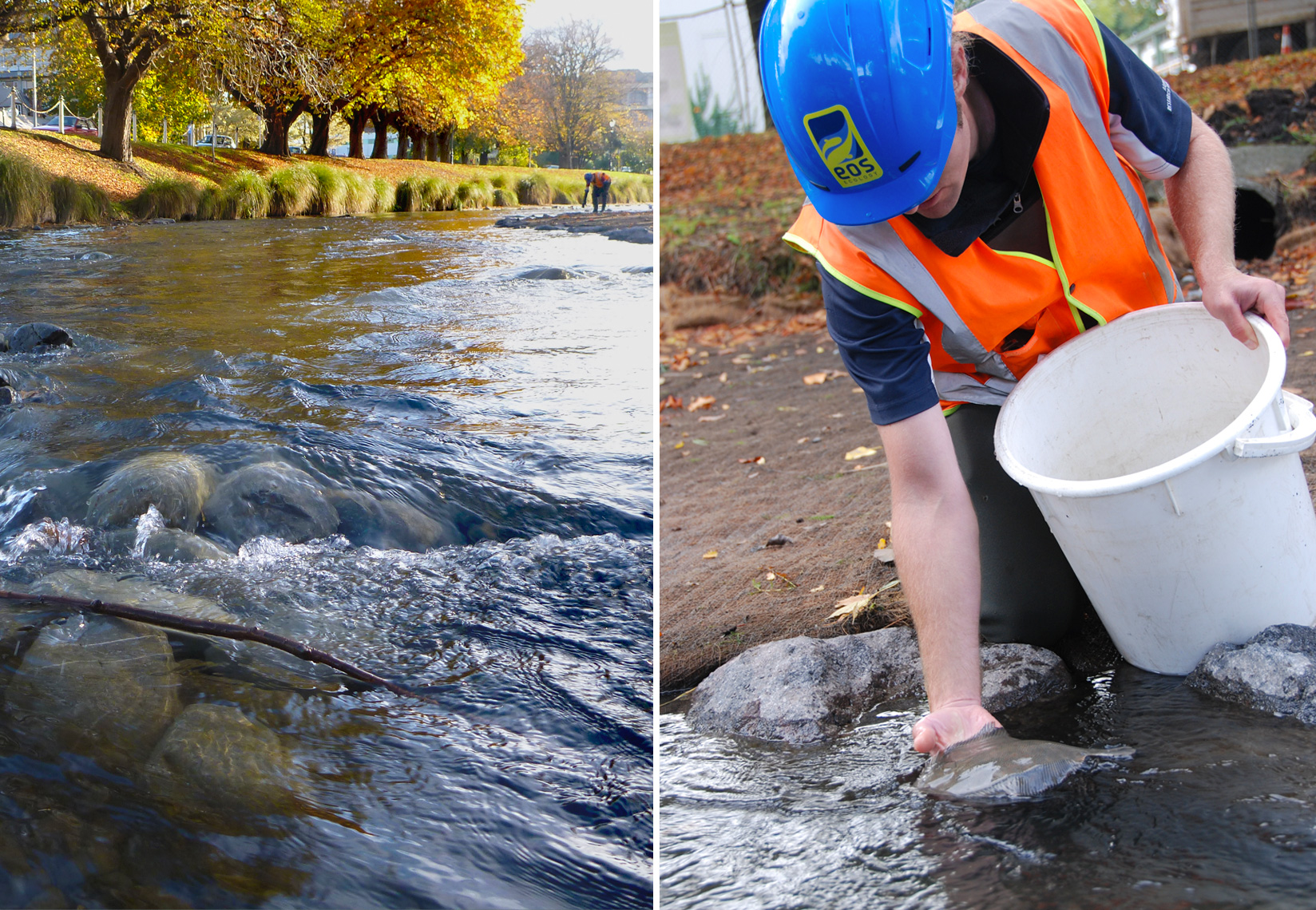
- Undertook all fish rescue work during construction, resulting in the capture and release of 1,591 fish. Developed a bespoke fish rescue method of electrofishing soft sediment removed from non-wadeable sections of the river, recovering over 400 fish that conventional methods would have missed, including eels, lamprey, bullies, and flounder.
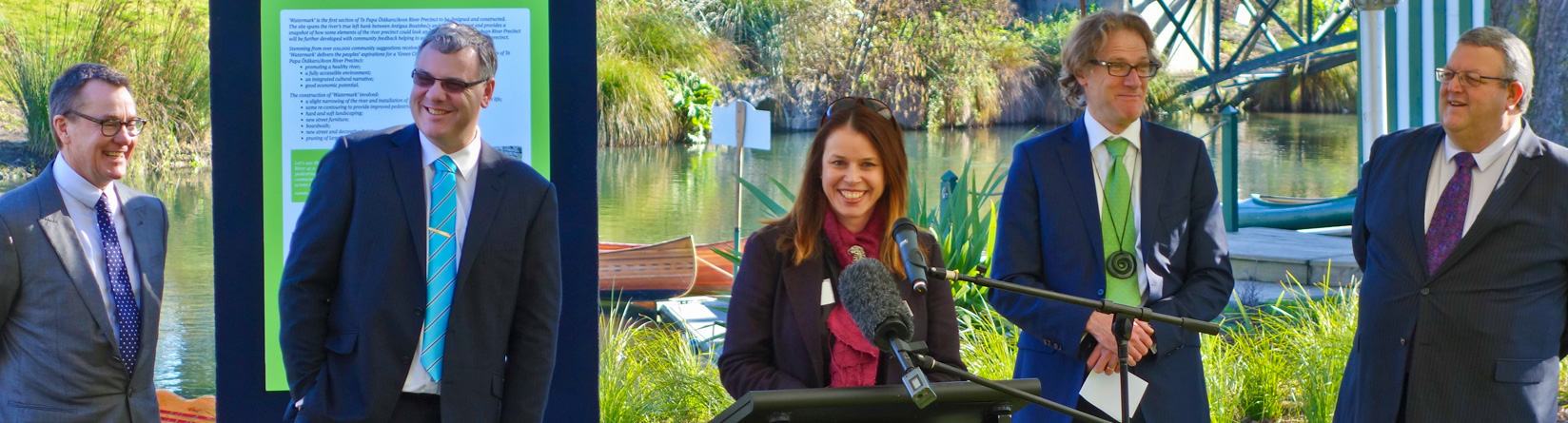
- Became the spokesperson for the ARP on behalf of CERA, featuring in multiple videos, news interviews and school engagement programmes.

outcome
The in-river works has transformed the Ōtākaro/Avon River through Christchurch’s central city. Channel narrowing and sediment trap-riffle complexes have increased flow velocities and promoted trapping and self-cleaning of fine sediments. Bank edge treatments have increased cover for fish species, while faster-flowing riffles have improved fish spawning habitat and conditions for cleanwater invertebrate taxa, creating hydraulic diversity the river had lacked for decades. The project demonstrated that ecological science can lead the design of urban river infrastructure – not as a constraint, but as the primary organising framework within which engineering and landscape architecture are integrated. The ARP became one of the most significant urban river rehabilitation programmes undertaken in Aotearoa New Zealand. The tuna townhouses at The Terraces proved particularly successful, with over 40 longfin eels taking up residence. The Terraces section won the George Malcolm Award at the NZILA Awards in 2019.
wider impact
- A nationally significant case study of ecology-led urban river restoration, demonstrating what is possible when ecological science leads rather than follows in multidisciplinary urban design.
- In-river design innovations are directly transferable to other Aotearoa New Zealand urban waterway rehabilitation projects, particularly the fine sediment self-cleaning approach and the prescriptive Ecologist’s Brief for construction teams.