
Whaka Īnaka: Causing Whitebait
Applied research and community engagement programme providing temporary īnaka spawning habitat in post-earthquake Ōtautahi/Christchurch – a collaboration between EOS Ecology, Te Rūnanga o Ngāi Tahu, and the University of Canterbury.
2015–2017
context
Ōtautahi/Christchurch’s rivers were once renowned for their īnaka/whitebait runs, but that legacy had been in decline for decades, largely due to changes in riverbank management within the spawning reach. The 2011 Canterbury earthquakes compounded the problem: tilting of the estuary bed shifted the saltwater wedge (the tidal zone where īnaka spawn), creating uncertainty about where spawning grounds were in a post-earthquake landscape. At the same time, degraded bank habitat at historic spawning sites meant that where īnaka could spawn, conditions were often unsuitable for egg survival.

challenge
- Post-earthquake uncertainty about where īnaka were now spawning, combined with degraded riverbank habitat at historic spawning sites – the project needed to locate current spawning areas and provide immediate habitat where conditions had deteriorated.
- Influencing long-term council policy on bank maintenance practices within the spawning reach required not just scientific evidence, but meaningful community and iwi engagement to build broad public support for change.
- The project could not run without the help of volunteers – monthly monitoring across 34 sites over a five-month spawning season required a committed community network alongside the science team.
our role
EOS Ecology was the project lead for Whaka Īnaka: Causing Whitebait, responsible for the science programme, community engagement, school programme design, and project communications. Working alongside Te Rūnanga o Ngāi Tahu and the University of Canterbury’s (UC) Marine Ecology Research Group and Resilient Shorelines programme, EOS Ecology designed and delivered the largest-scale īnaka temporary spawning habitat initiative undertaken in Aotearoa New Zealand at that time.
how we approached it
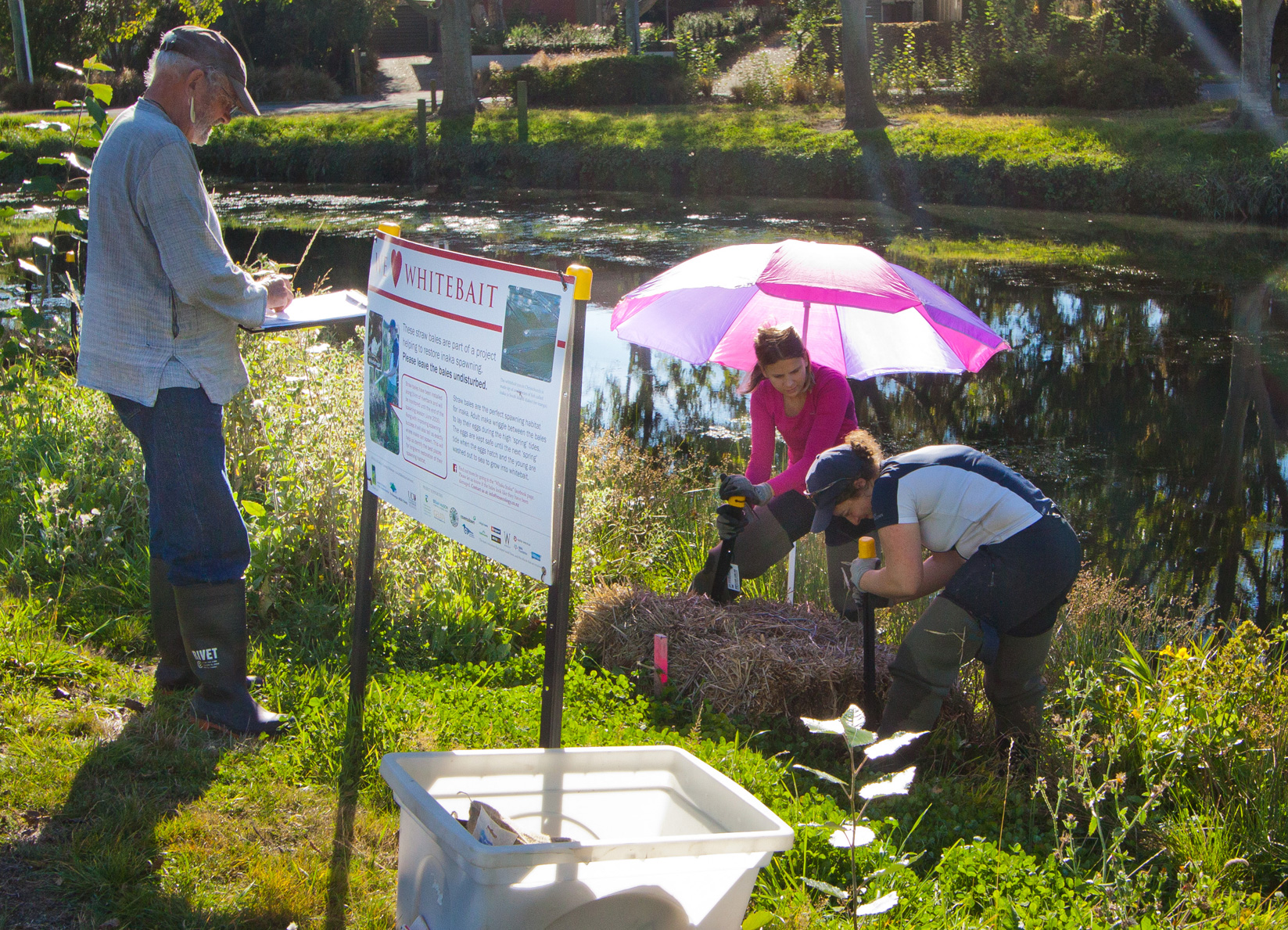
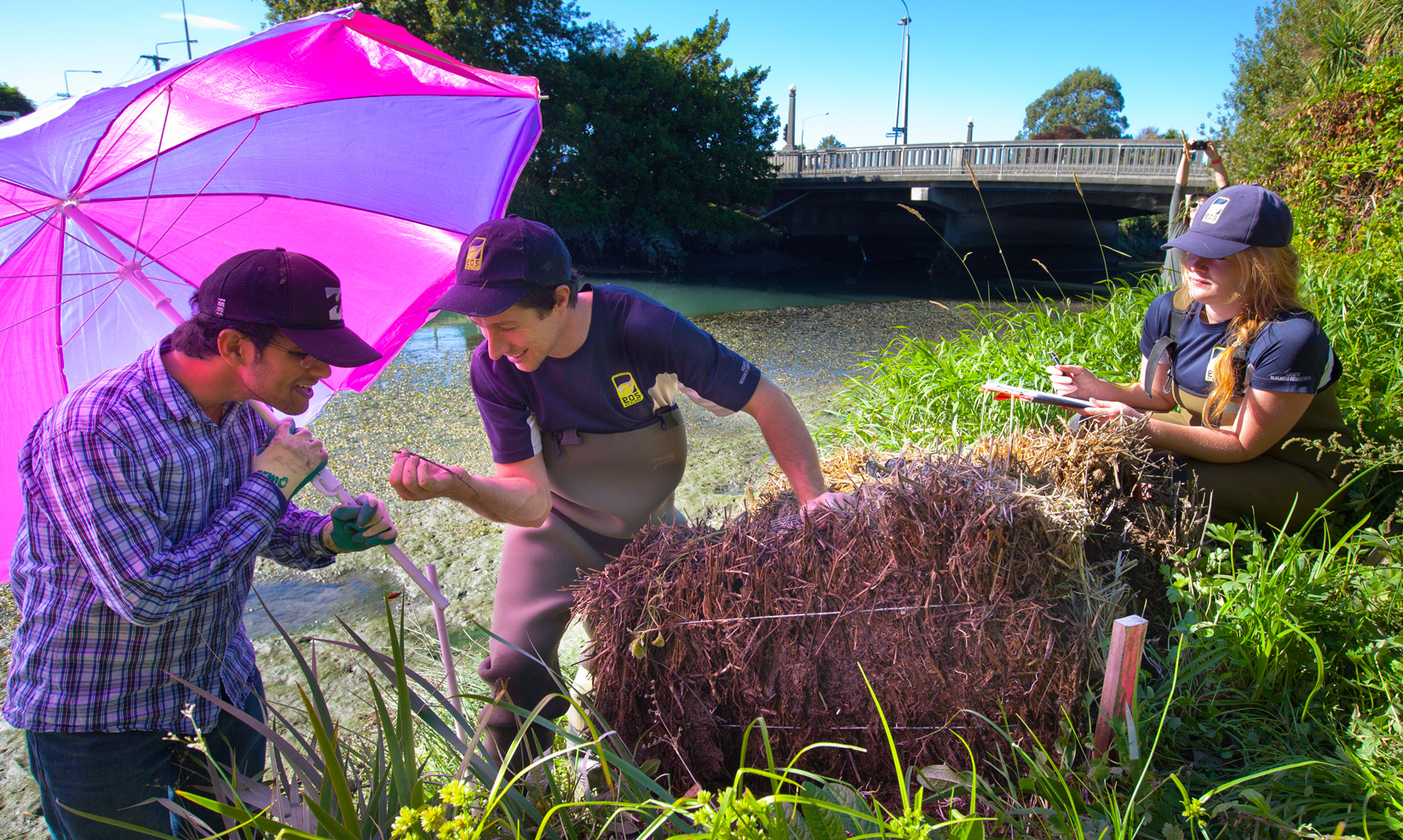
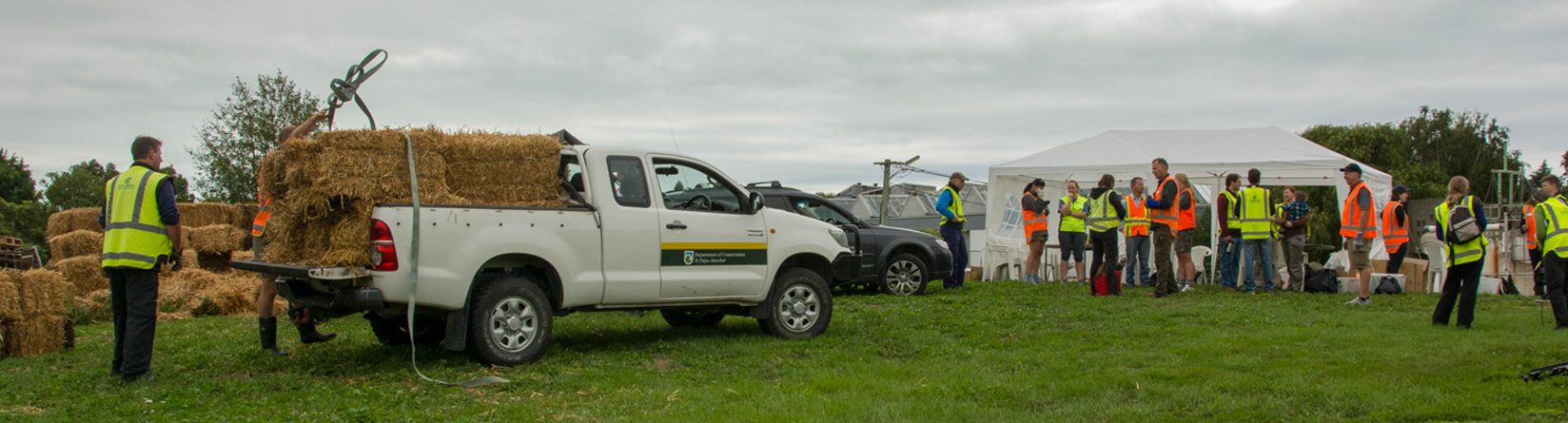
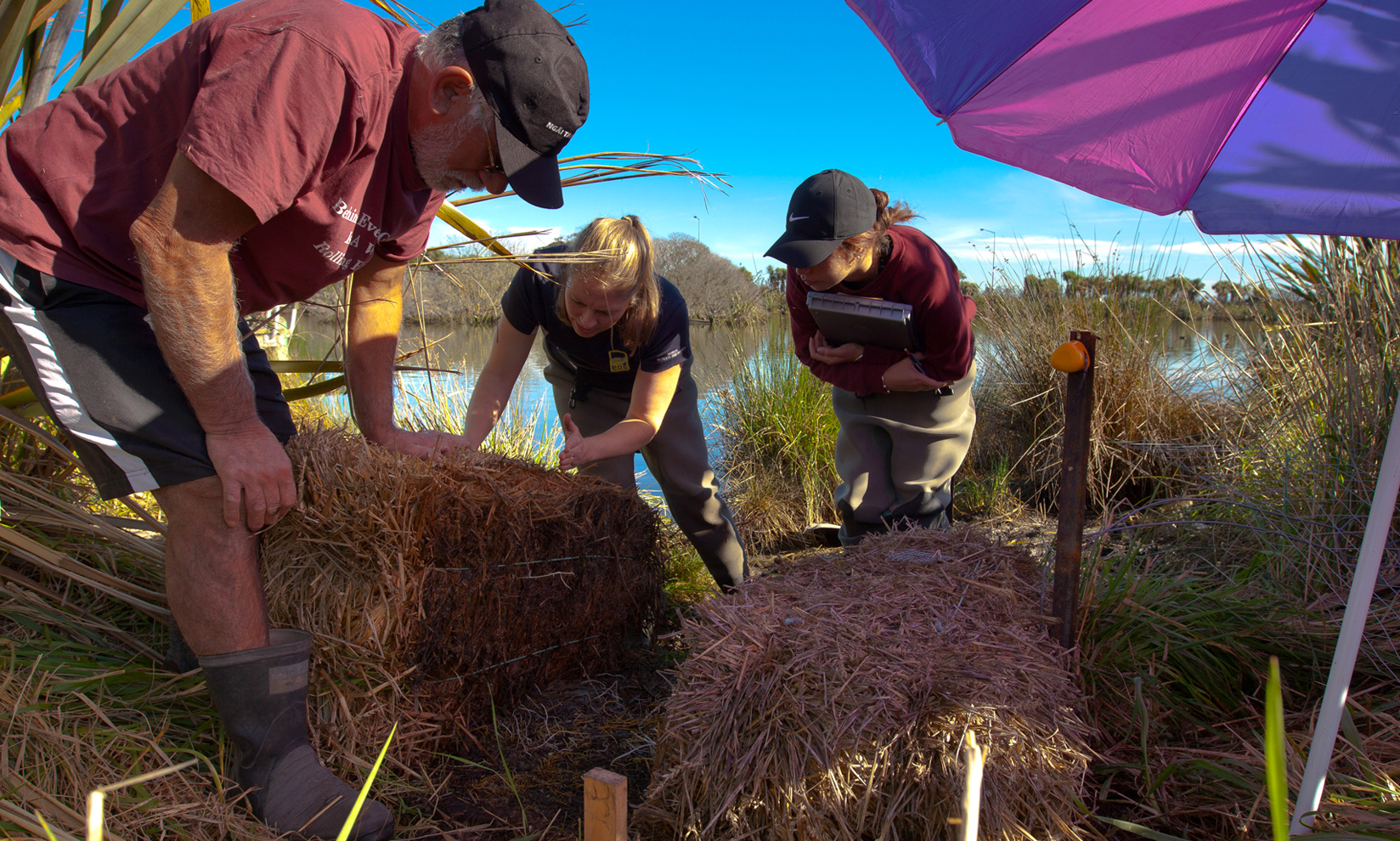
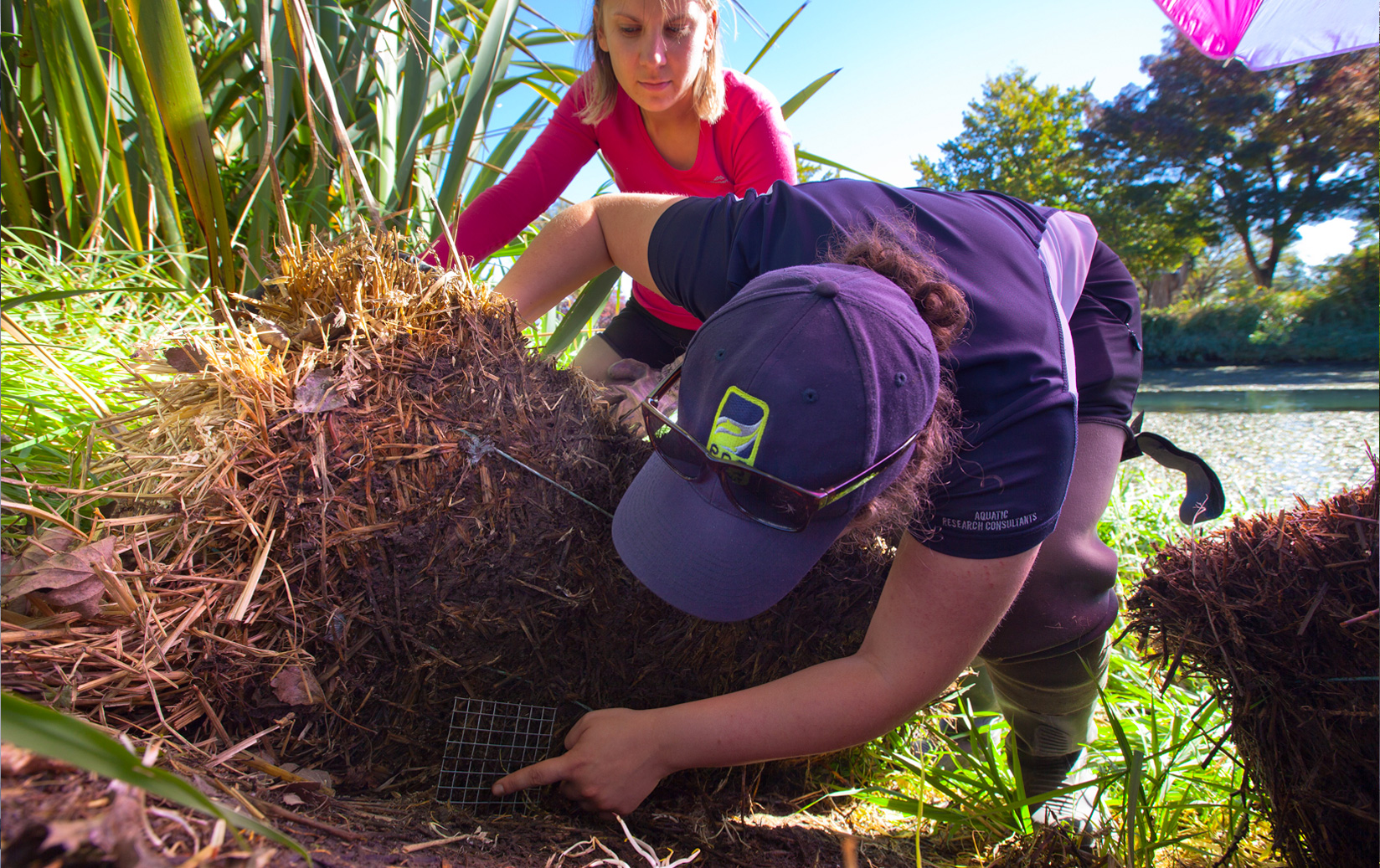
- Installed 204 straw bales at 34 sites along the lower reaches of the Ōpāwaho/Heathcote River, Steamwharf Stream, and around Lake Kate Sheppard on the Ōtākaro/Avon River. The bales, an approach developed by Mike Hickford at UC, provided temporary spawning habitat that kept eggs safe and moist during their month-long gestation, acting as a ‘Hilton Hotel’ for īnaka in areas where natural bank habitat had degraded. Bale placement was carefully planned in relation to the saltwater wedge location and the monthly ‘spring’ high tide levels.
- Monitored all sites monthly throughout the Feb–Jun 2016 spawning season with a dedicated team of EOS Ecology scientists and community volunteers. Developed a standardised egg counting methodology using grids at multiple scales to estimate egg density, area, and productivity per bale set, producing a comprehensive post-earthquake spawning dataset for both rivers.
- Led community engagement across the programme – Ngāi Tūāhuriri hapū, local businesses, and public volunteers participated in bale installation, monitoring, and removal. Created riverside information panels, a dedicated Facebook page, and ran public events. The programme generated over 439 community volunteer hours, with 100% of surveyed volunteers supporting permanent habitat restoration.
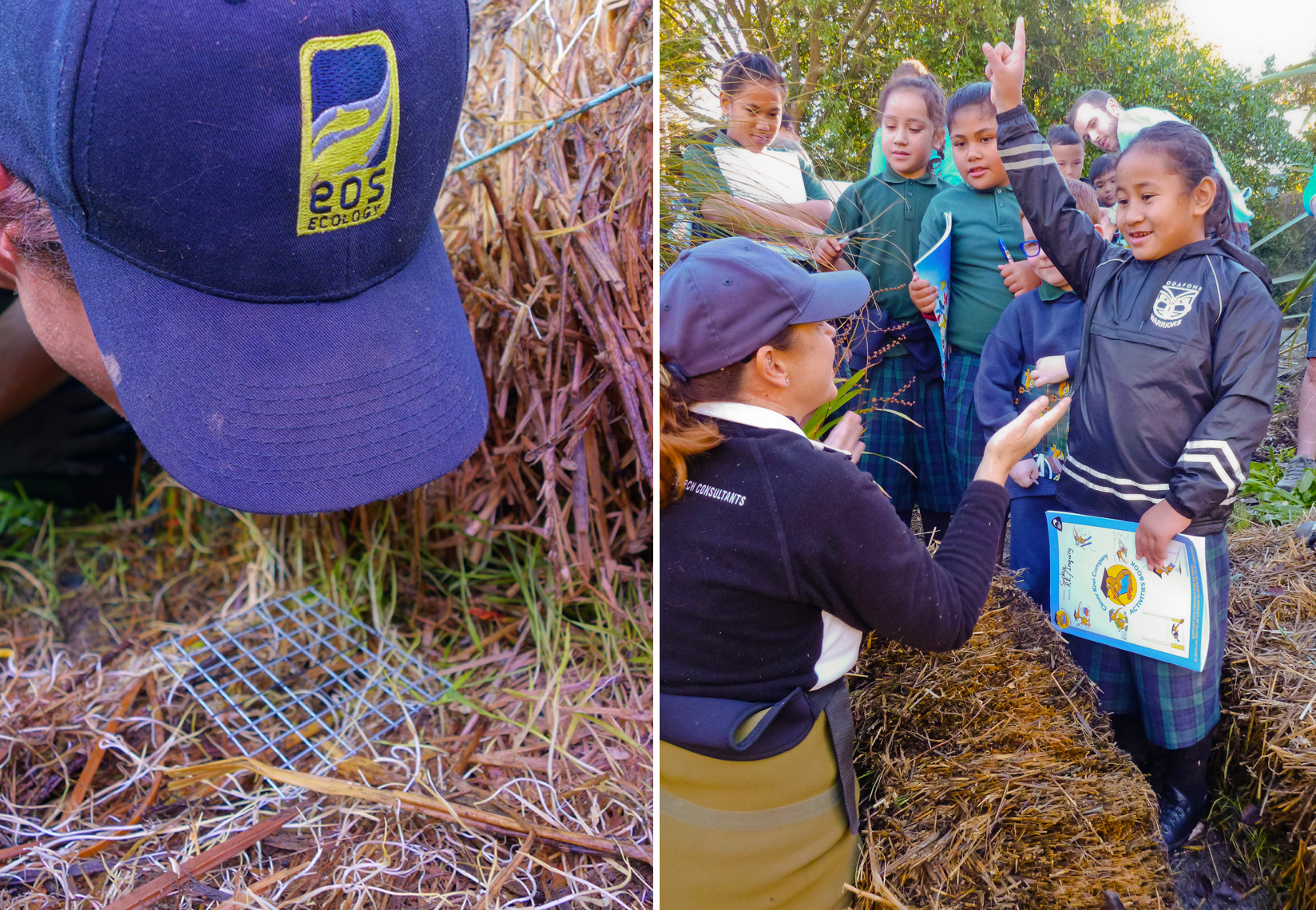
- Developed and delivered the Pest Monitoring Module, a science programme engaging 16 Christchurch schools and 1,800 students (ages 3–15) in monitoring pest and predator activity at bale sites over five months. Students collected data using an online map-based database (developed with Te Rūnanga o Ngāi Tahu), contributing 450+ hours and producing the city’s first pest monitoring report card for the Ōpāwaho/Heathcote River. The programme culminated in students presenting their findings to Christchurch City Council (CCC) and Environment Canterbury Councillors.

outcome
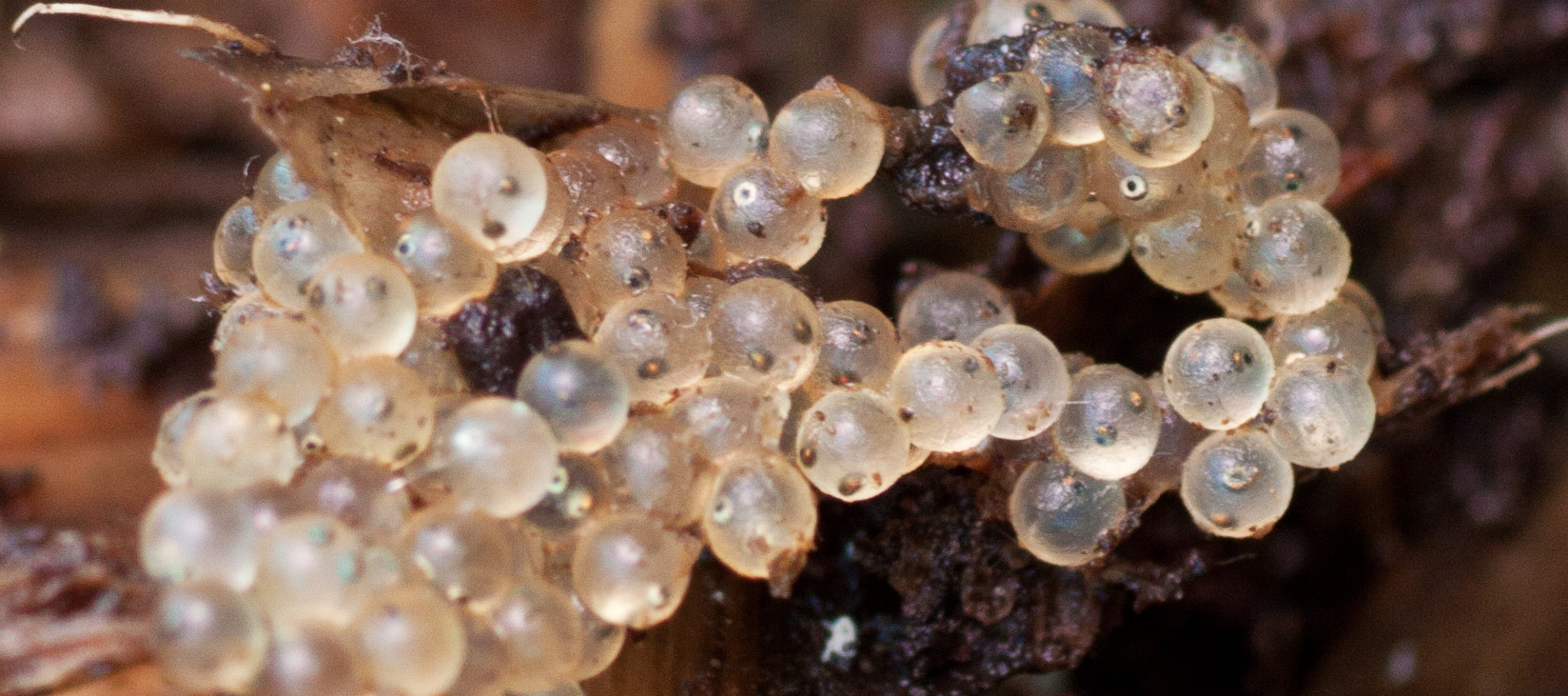
The ‘Whaka Īnaka’ bales nurtured over 1.5 million īnaka eggs during the 2016 spawning season. In the Ōpāwaho/Heathcote catchment alone, an estimated 296,829 eggs were found in bales where no spawning was occurring in the surrounding area – eggs that would not have survived without the temporary habitat. On the Ōtākaro/Avon River, egg densities under one bale reached an astounding 468,750 per m2.
The programme confirmed that the post-earthquake spawning reach on the Ōpāwaho/Heathcote had shifted downstream, providing a critical road map for where long-term bank restoration would have the greatest effect. That evidence, combined with student presentations to council, was central to CCC trialling alternative bank maintenance practices in īnaka spawning zones – a direct policy change driven by the programme’s science and community engagement. Whaka Īnaka: Causing Whitebait was recognised as a finalist at the 2017 NZ River Story Awards.
wider impact
- A model for how applied research, iwi partnership, and community engagement can combine to influence environmental policy, demonstrating that science communicated through direct community involvement creates the public mandate needed for long-term habitat restoration.
- Sits at the heart of a priority aim in the earthquake recovery process: restoring the mahinga kai values of Ōtautahi/Christchurch’s waterways. “With a greater awareness of caring for our rivers and restoring the habitat for our mahinga kai species, our connection to our environment and its ability to feed its people, can also be restored,” said Te Marino Lenihan of Ngāi Tūāhuriri.