
Freshwater & Estuary Macroinvertebrate Sample Processing
Purpose-built laboratory, specialist taxonomists, and quality systems that constantly exceed national standards, because every environmental decision built on macroinvertebrate data depends on getting the identification right.
2001–present (ongoing)
context
The sampling and monitoring of macroinvertebrates forms a significant component of environmental reporting in Aotearoa New Zealand. It’s relied on for State of the Environment (SOE) reporting, consent applications, surveys & investigations, research, and long-term monitoring. The data underpins regulatory decisions, informs policy, and shapes how communities understand the health of their waterways.
But macroinvertebrate data is only as reliable as the laboratory that processes it. Every biotic index, every MCI score, every SOE trend line ultimately rests on whether someone correctly sorted, identified, and counted what was in the sample. If these steps are compromised, everything downstream is affected: reporting, planning, consenting, and policy.

challenge
- There is no mandatory accreditation for macroinvertebrate processing laboratories in Aotearoa New Zealand. The NEMS Macroinvertebrates (2022) standard defines laboratory credentials, but compliance is self-assessed. This means the gap between professional-grade processing and informal operations is invisible to clients.
- SOE monitoring programmes generate hundreds of samples per season, each requiring consistent treatment from receipt through to final data delivery. Managing this volume without errors requires purpose-built systems: chain of custody, sample tracking, standardised protocols, internal QA/QC, and structured data workflows.
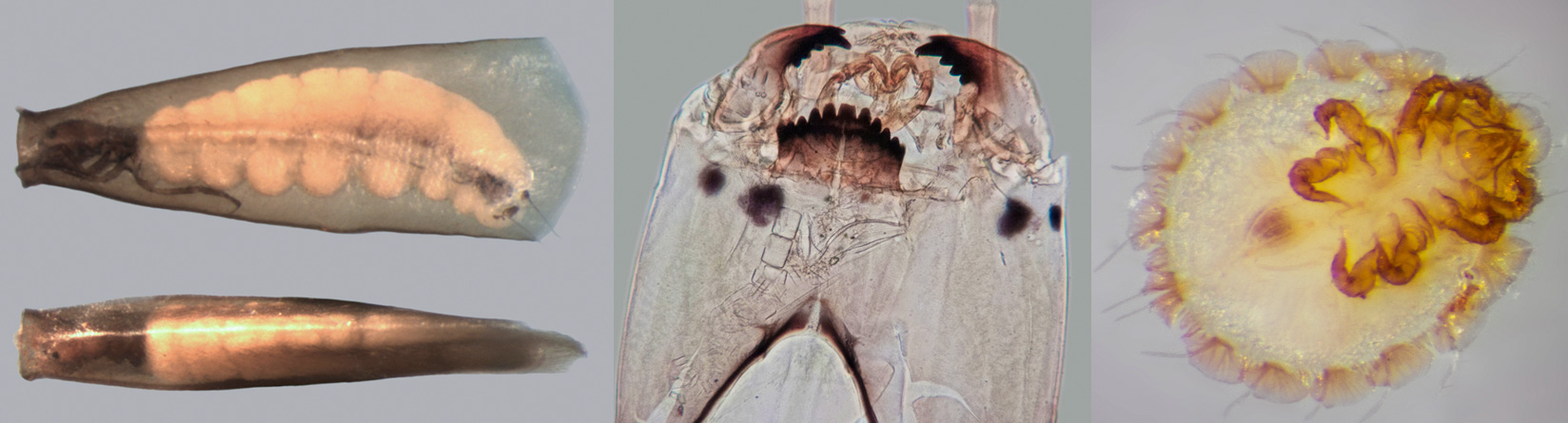
- Taxonomic identification of freshwater and estuary macroinvertebrates demands specialist skill built over years. Aotearoa New Zealand has a unique fauna with ongoing nomenclature revisions, regional variation, and taxa that can only be reliably distinguished under high-magnification optics by experienced processors.
- Councils need more than raw identifications – they need data delivered in formats that integrate with their databases, with quality coding metadata, and with the confidence that results will withstand external QC scrutiny.
our role
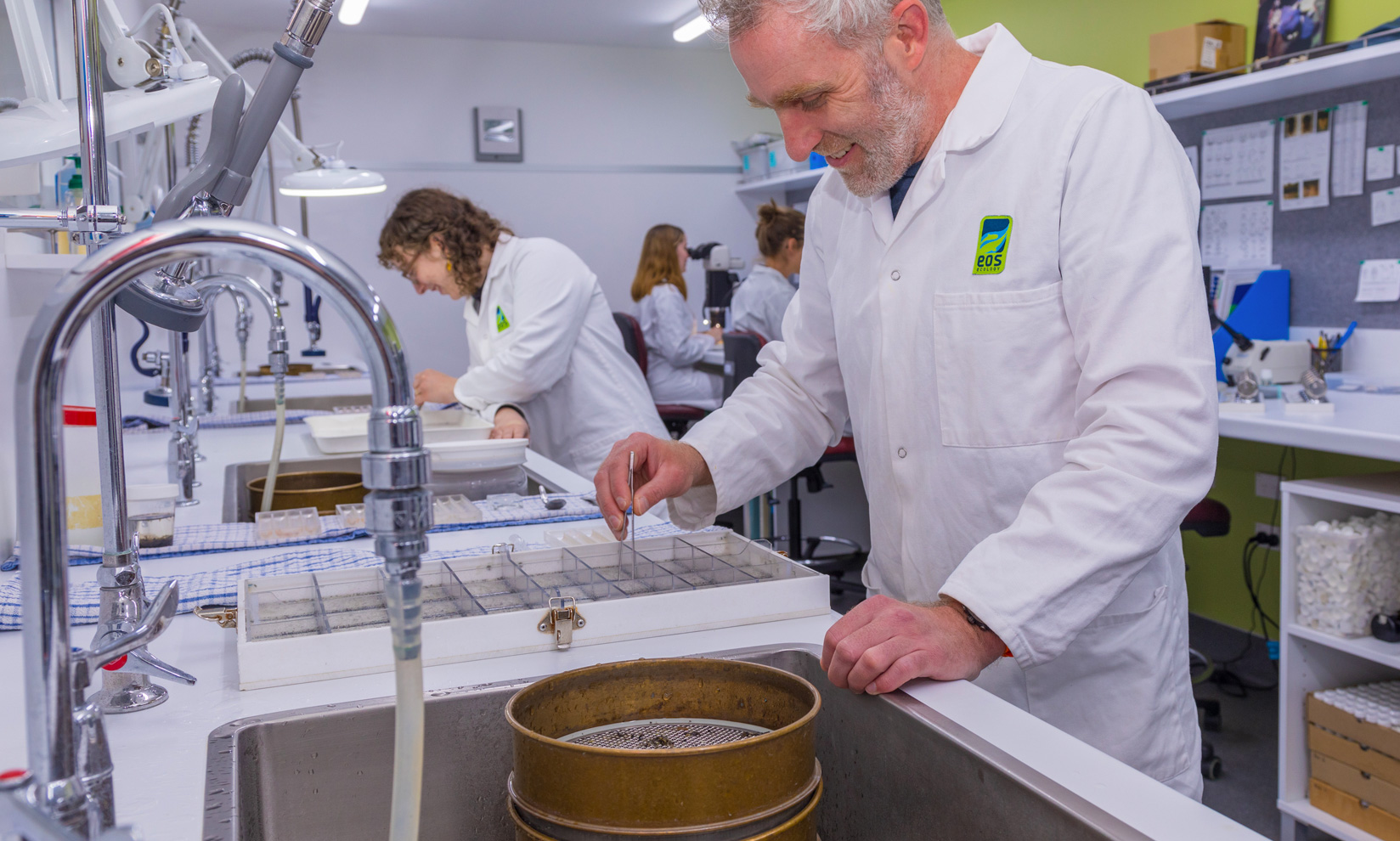
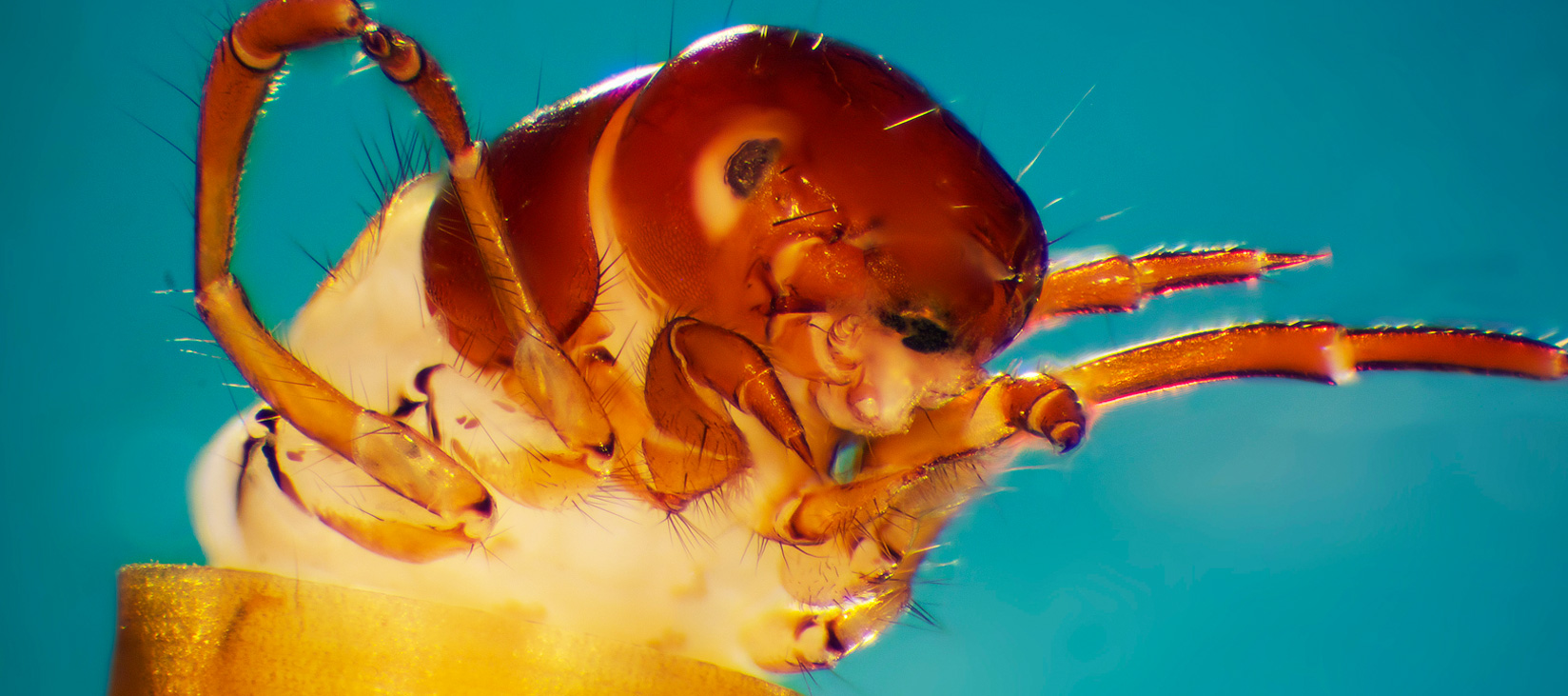
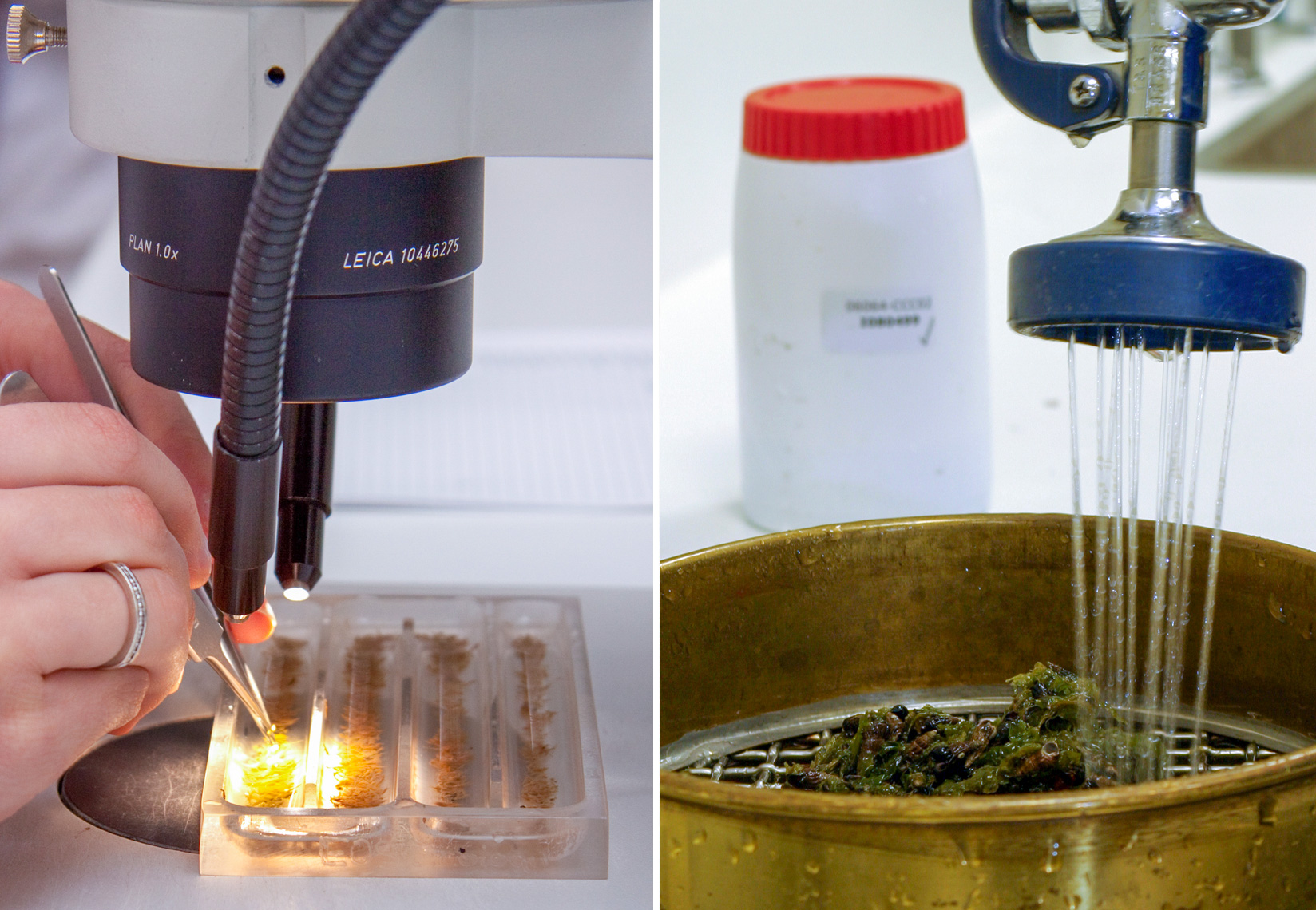
Our laboratory processes samples for SOE monitoring, consent applications, surveys, investigations, research, and classification of new species. We deliver the full service chain: sample receipt and storage, processing to national standards and bespoke methodologies, internal and external QA/QC, data preparation, and data delivery in client-specified formats. We provide this service to councils, consultants, research organisations, and industry.
how we approached it
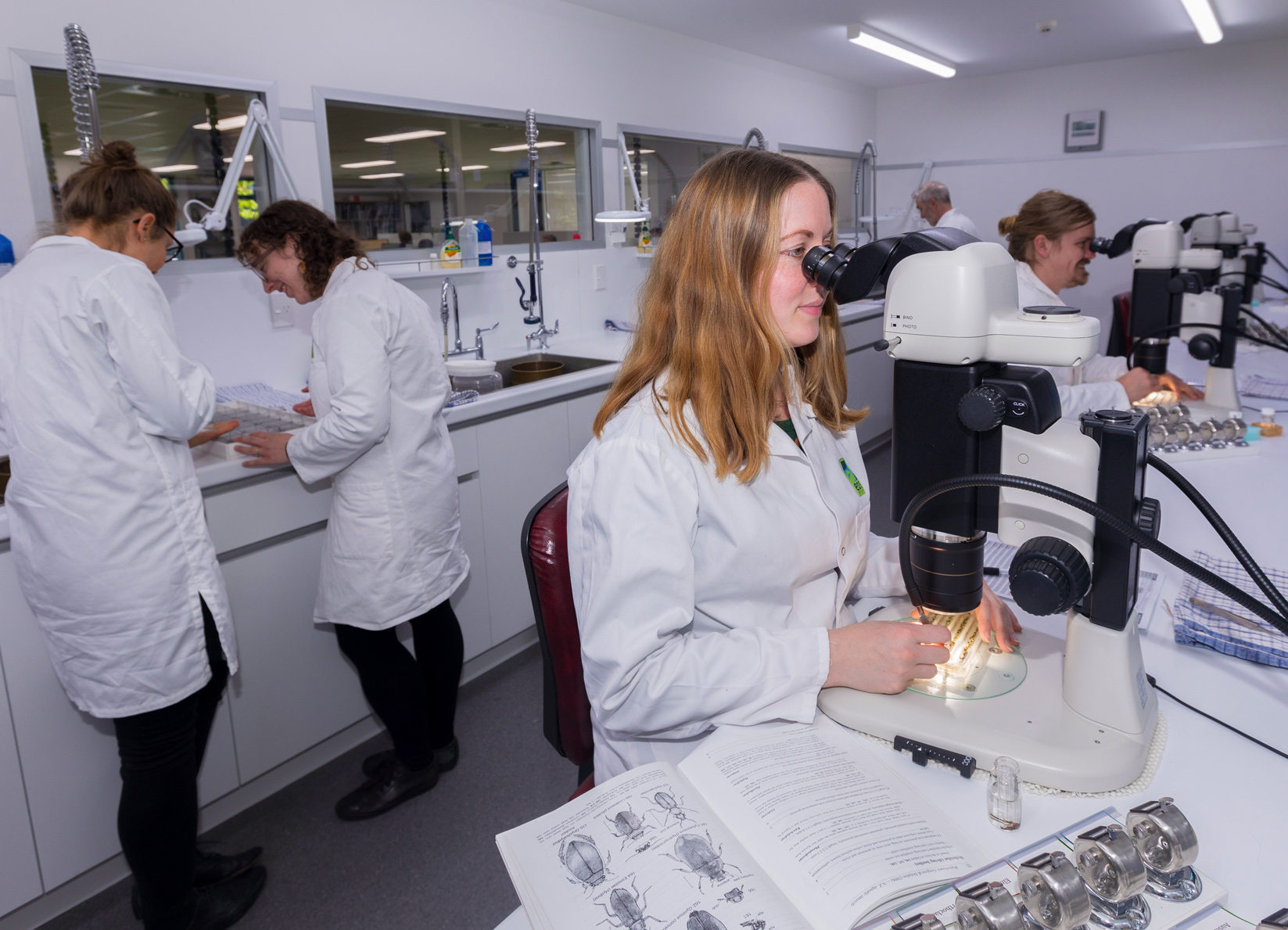
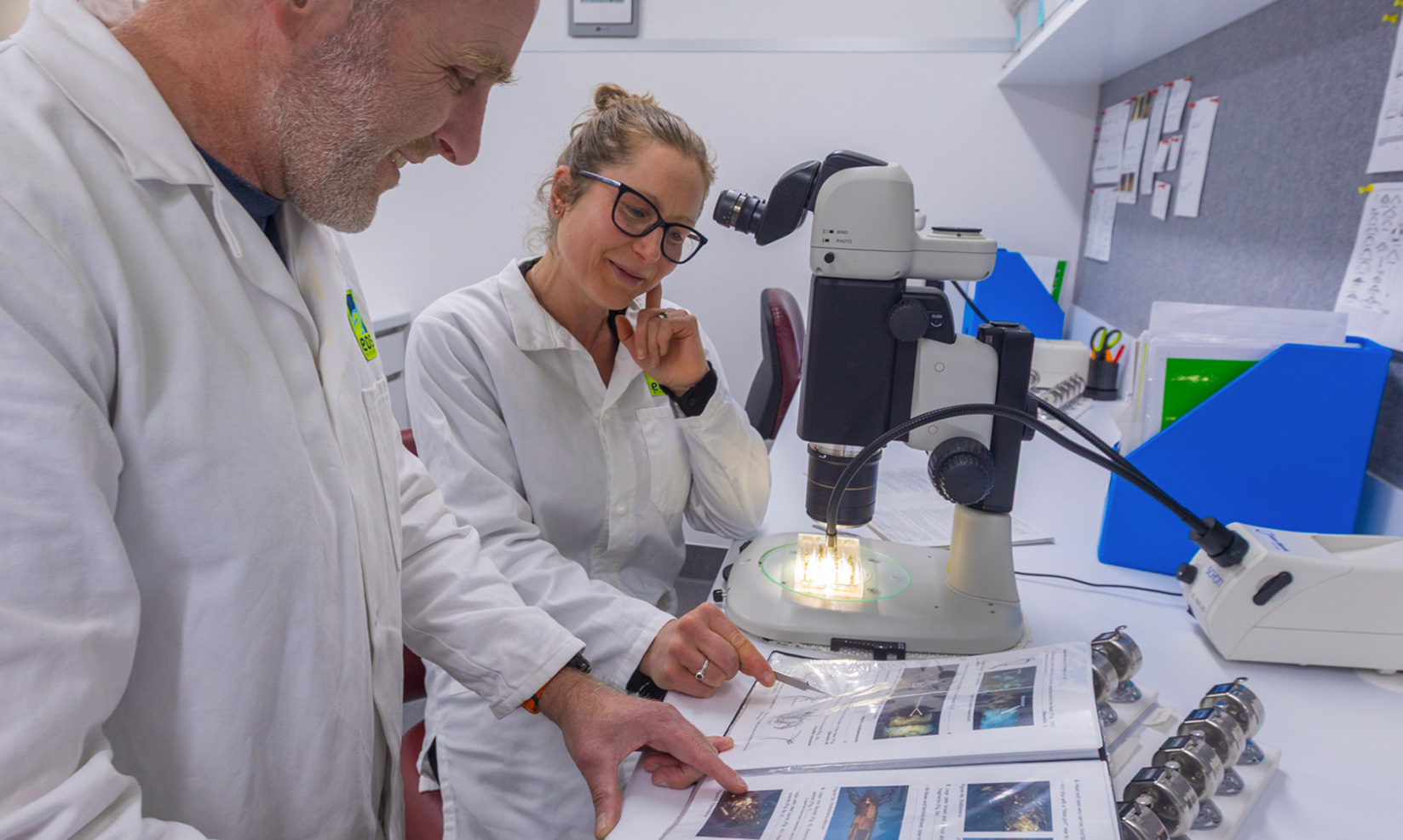
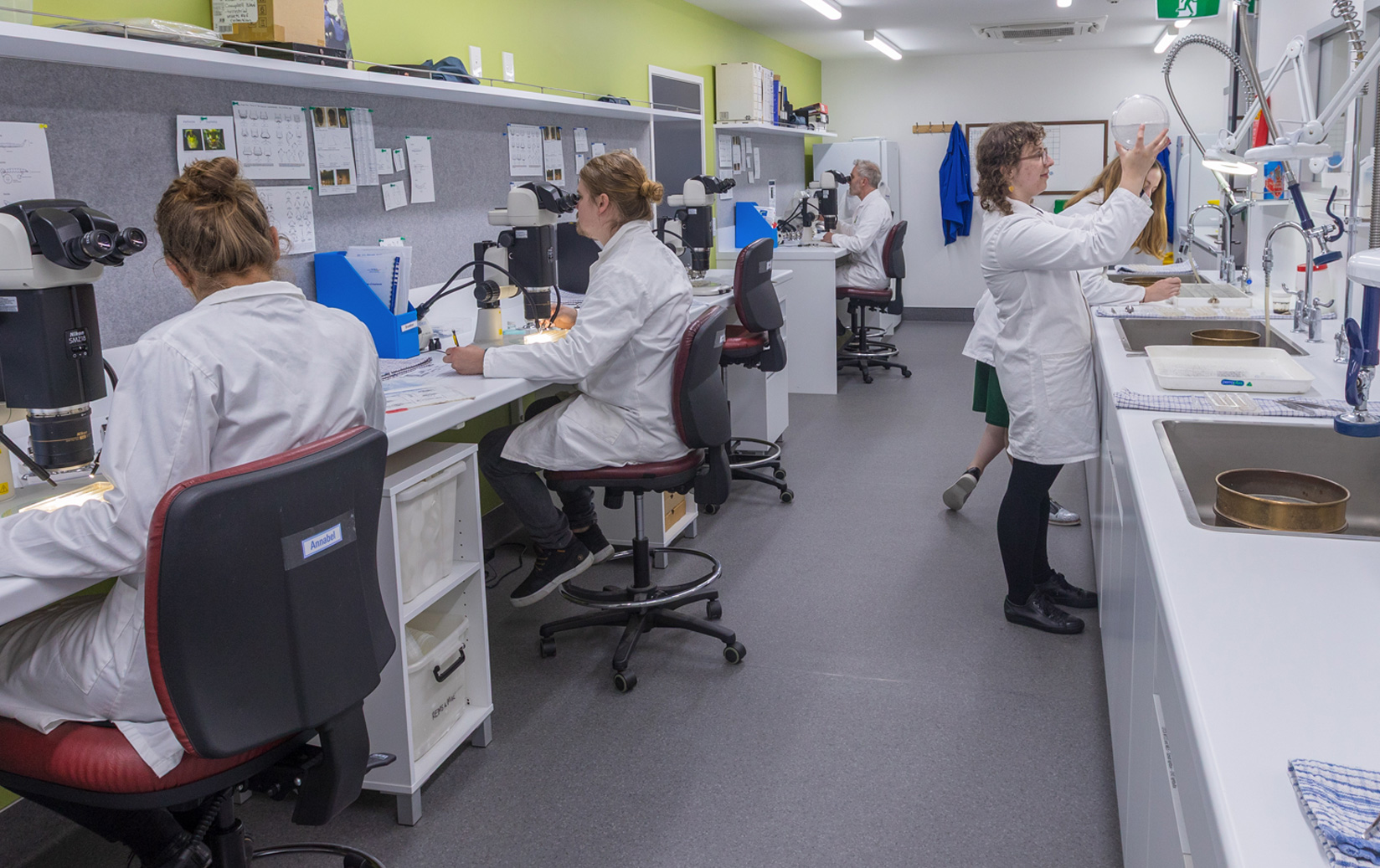
- Purpose-built laboratory (in 2007 & again in 2023) – designed with detailed input from our processing team on lighting, bench layout, ergonomics, and ventilation. Five workstations with Nikon SMZ18 high-magnification dissecting microscopes. Positive-pressure environment with ten volume changes per hour (300 L/s fresh air), substantially exceeding health and safety requirements.
- Dangerous goods storage vault (2,200 L capacity) – custom-built, Location Compliance Certified for flammable substances. Allows us to accept samples for storage prior to processing and retain them post-processing for up to 12 months, removing the need for clients to manage hazardous sample storage.
- Rigorous internal QC – minimum 5% of samples for senior processors, 10% for intermediate, and up to 100% for junior processors. Our unfailing commitment to quality assurance means the standards we hold ourselves to exceed all of the NEMS pass thresholds for external QC: we expect % Taxonomic Disagreement ≤ 5 (NEMS pass: <10), % Missed Individuals ≤ 5 (NEMS pass: <10), % Missed Taxa ≤ 10 (NEMS pass: <20).
- External QC track record – passed every external quality control audit commissioned by our council clients. As of June 2026, our most recent result was % Taxonomic Disagreement 0.4, % Missed Individuals 3.0, % Missed Taxa 3.0 – well above the required standard.
- NEMS expertise – not only were we a member of the Laboratory Experts Workshop process during preparation of the MfE-funded NEMS Macroinvertebrates (2022) standard, but we provided key methodology and review input for the sample processing section. We have assisted multiple councils in transitioning from Stark et al. (2001) protocols to NEMS, including advice on collection methods, preservation, and quality coding of historic data.
- Chain of custody and sample tracking – digital sample schedule from receipt to disposal, with multiple verification checkpoints linking processing data to correct sample IDs and client metadata. Internal vial labelling, condition recording, and waterproof component labels ensure traceability throughout.
- Master Taxa List integration – detailed taxonomic information feeds directly into data files, ensuring consistent nomenclature and correct classifications. Senior taxonomists regularly update the list with newly published revisions.
- Extensive reference collection – physical specimens and digital images maintained by senior taxonomists, supplemented by published and our own bespoke identification keys. A training lead ensures the team works from the latest taxonomic information at all times.
- Flexible data delivery – standard templates developed in collaboration with clients over many years, with the ability to adapt to bespoke formats for eco-database input. FME-based automated data transformation and delivery capability available for clients seeking streamlined workflows.

outcome
Over 8,000 macroinvertebrate samples processed for councils alone, with 4,000 more for consultancies, research organisations, industry, and internal investigations.
Responsible for new distribution records for multiple macroinvertebrate species, including those of biosecurity interest. Also assisted in the classification of two new genera and five new species, with scientific publications to New Zealand Journal of Marine & Freshwater Research and New Zealand Journal of Zoology.
Long-term client relationships built on consistent quality and reliability, each retained through demonstrated performance, not just price. When external QC results constantly exceed national standards by a factor of five or more, clients can rely on the data without reservation.
wider impact
- Contributed to national standards – we were responsible for writing the new processing methods that form part of the NEMS Macroinvertebrates (2022) standard, meaning our expertise is recognised at the highest level.
- Supported multiple councils through the transition from legacy protocols to NEMS, including recoding historic data, recalculating biotic indices, and advising on method changes that maintain data continuity.