
eDNA Insights Report Service
An automated science-driven interpretation of your eDNA results, transforming raw laboratory data into fully classified, analysis-ready datasets. It reduces taxonomic noise, evaluates detection certainty, matches species against comprehensive ecological profiles, and cuts out hours of manual data processing.
context
Environmental DNA (eDNA) sampling has become a widely adopted tool for biodiversity assessment in Aotearoa New Zealand’s freshwater environments, detecting species presence from genetic material in water samples without physical capture or special permits. It is increasingly used by practitioners and catchment groups alike.
Yet there’s a significant gap between receiving laboratory results and understanding what they mean. Your lab file gives you taxa names and sequence counts, but not the ecological context you actually need. This means turning raw eDNA results into something meaningful requires hours of manual data processing by scientists, and many practitioners simply don’t have the time, resources, or expertise to do it.

challenge
- eDNA laboratory data files provide a list of taxa names and sequence counts, but not much else.
- They can report detections at multiple taxonomic levels making it hard to work out actual taxa richness.
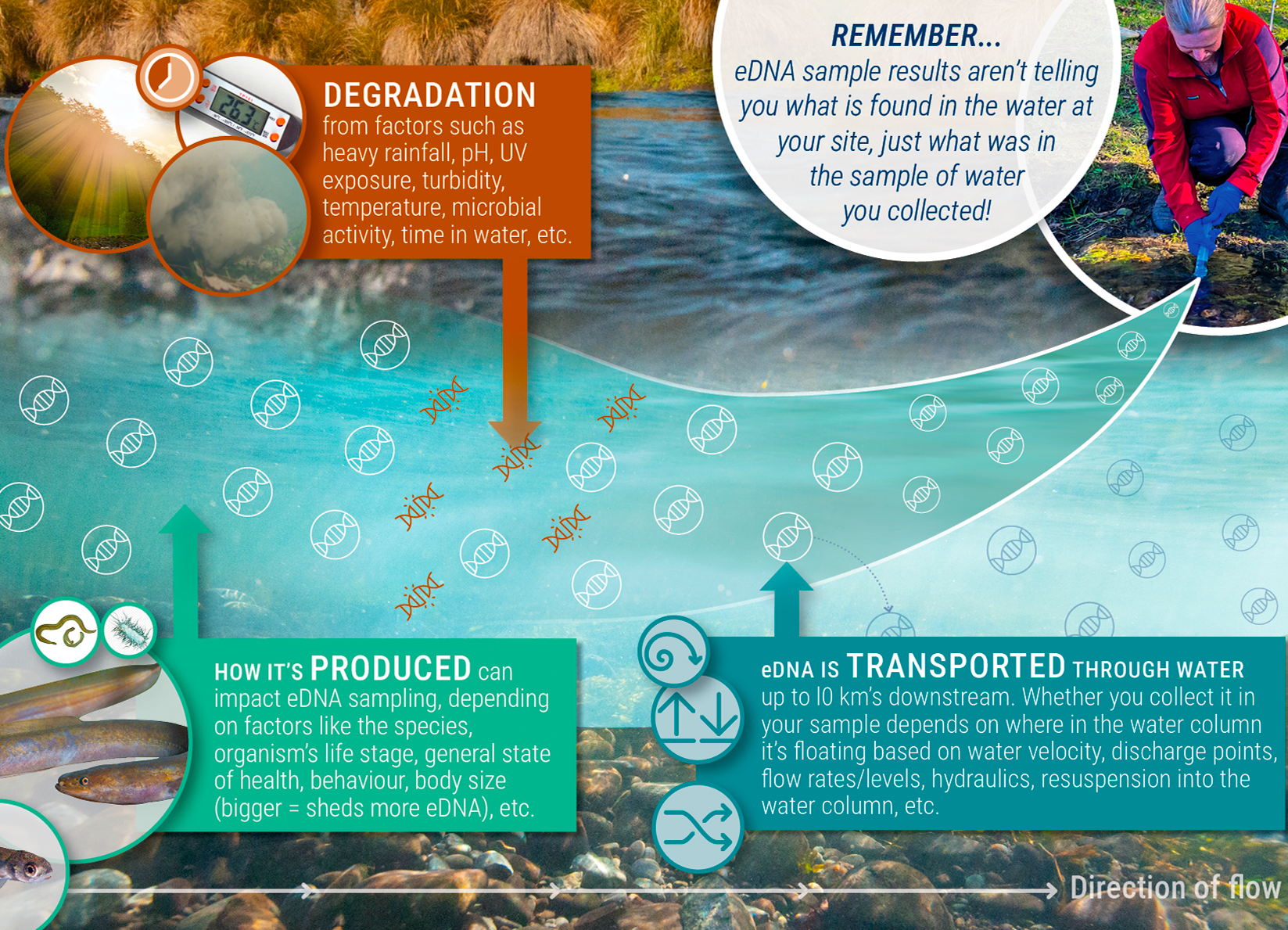
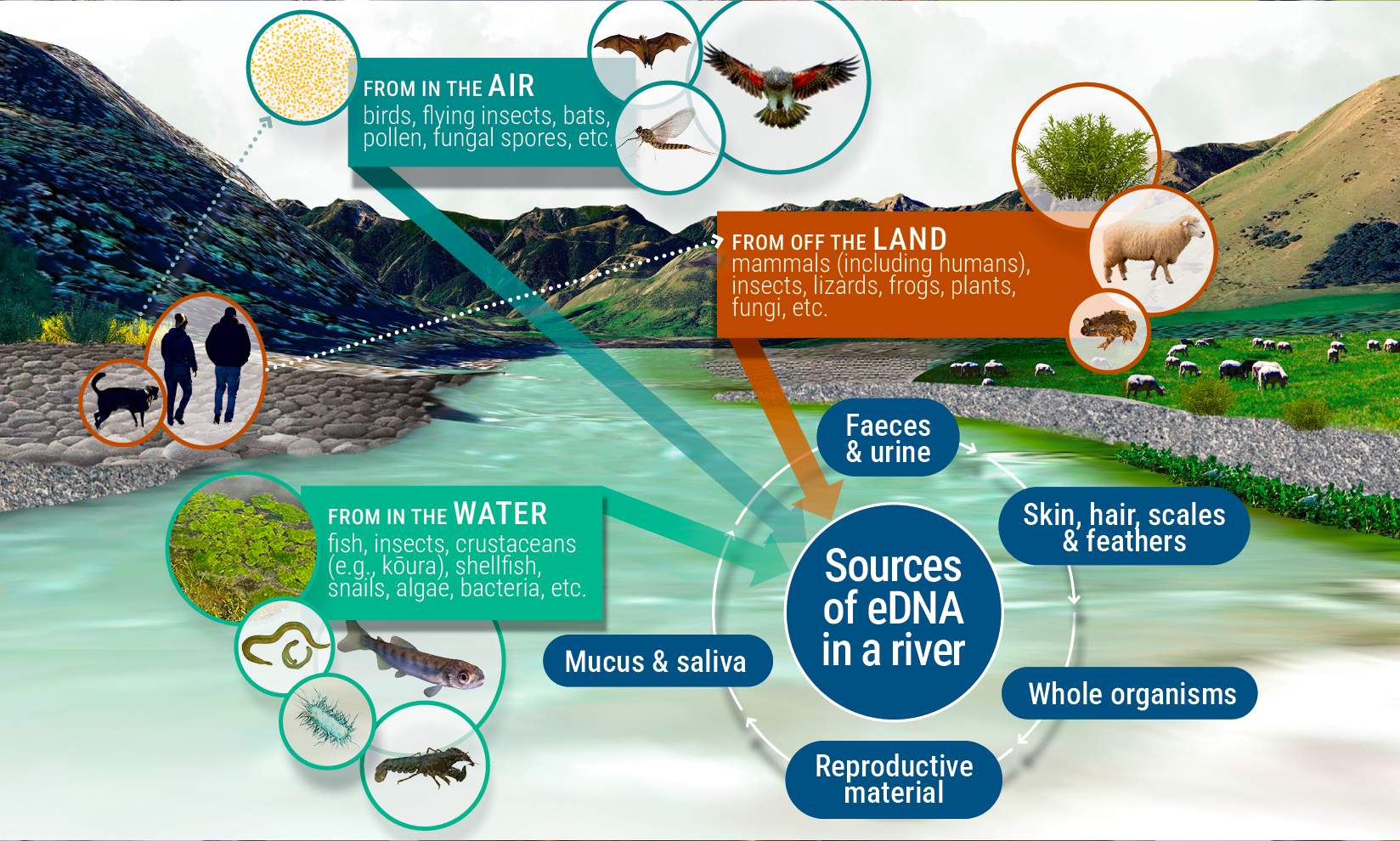
- Both the power and the weakness of eDNA is its ability to detect almost anything in a water sample, whether it’s living or dead. So knowing whether your eDNA signals are a real detection or an artifact is tricky.
- Interpreting eDNA results requires matching each detected taxon to its vital statistics, such as biostatus, conservation status, pest or recreational status, habitat type, and migratory status, to name a few. This information is dispersed across numerous databases, registers, and legislation, each holding a different piece of the puzzle, with different update frequencies and no unified taxonomic naming convention.
- The scale is substantial with 40,000+ species to match with their key attribute data. Doing this manually is neither practical nor sustainable.
our role
Having seen the interpretation of eDNA data as an ongoing issue not only for the general community (such as catchment groups), but also for expert practitioners such as ourselves, we endeavoured to find a permanent solution. EOS Ecology built eDNA Insights™ to streamline analysis for all, and to make high-quality ecological interpretation more accessible to everyone across Aotearoa New Zealand. Our drive is to harness the real power of eDNA and put the knowledge into the hands of anyone who wants to collect a water sample and learn more about their local awa and environment.
how we approached it
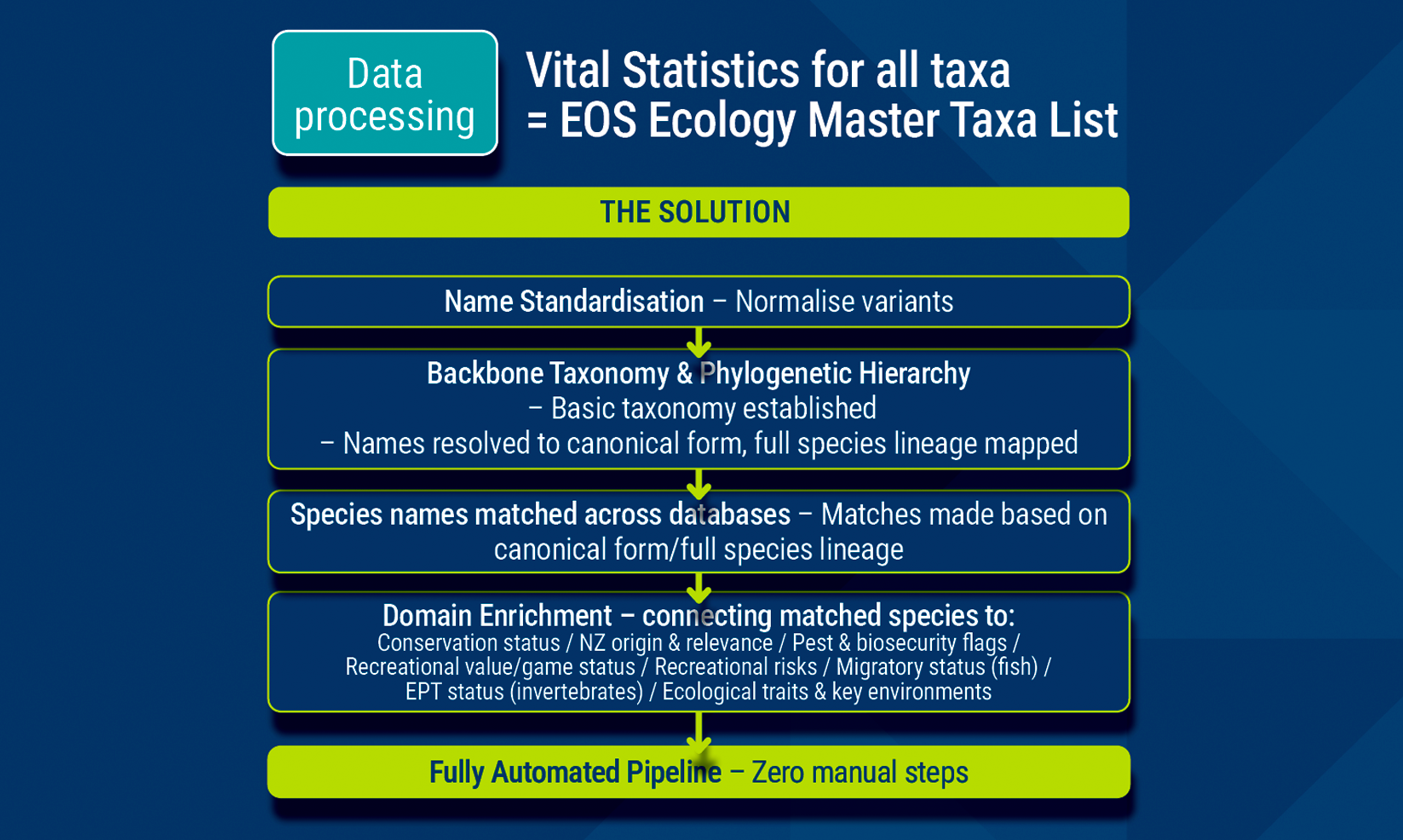
- Built and maintain the Master Taxa List, a curated database of 40,000+ species, each resolved to a canonical scientific name and mapped through full taxonomic classifications. This canonical name is the universal join key that connects lab data to authoritative ecological information from GBIF, WoRMS, NZOR, NZFFD, NZTCS, ONZPR, Weedbusters, MPI, Wildlife Act, Fisheries Regulations, DOC, NIWA, and more. Delivers pest and biosecurity flags, conservation status, biostatus, migratory status, EPT classification, ecological traits, and key environments, matched to every species in your data. The Master Taxa List is a dynamic resource, updated through a three-tier system that matches the frequency of revision of the underlying source data.
- Designed the service to be lab-agnostic. While currently configured for Wilderlab files, onboarding a new laboratory only requires a new data processing module – the Master Taxa List and enrichment pipeline remain the same.
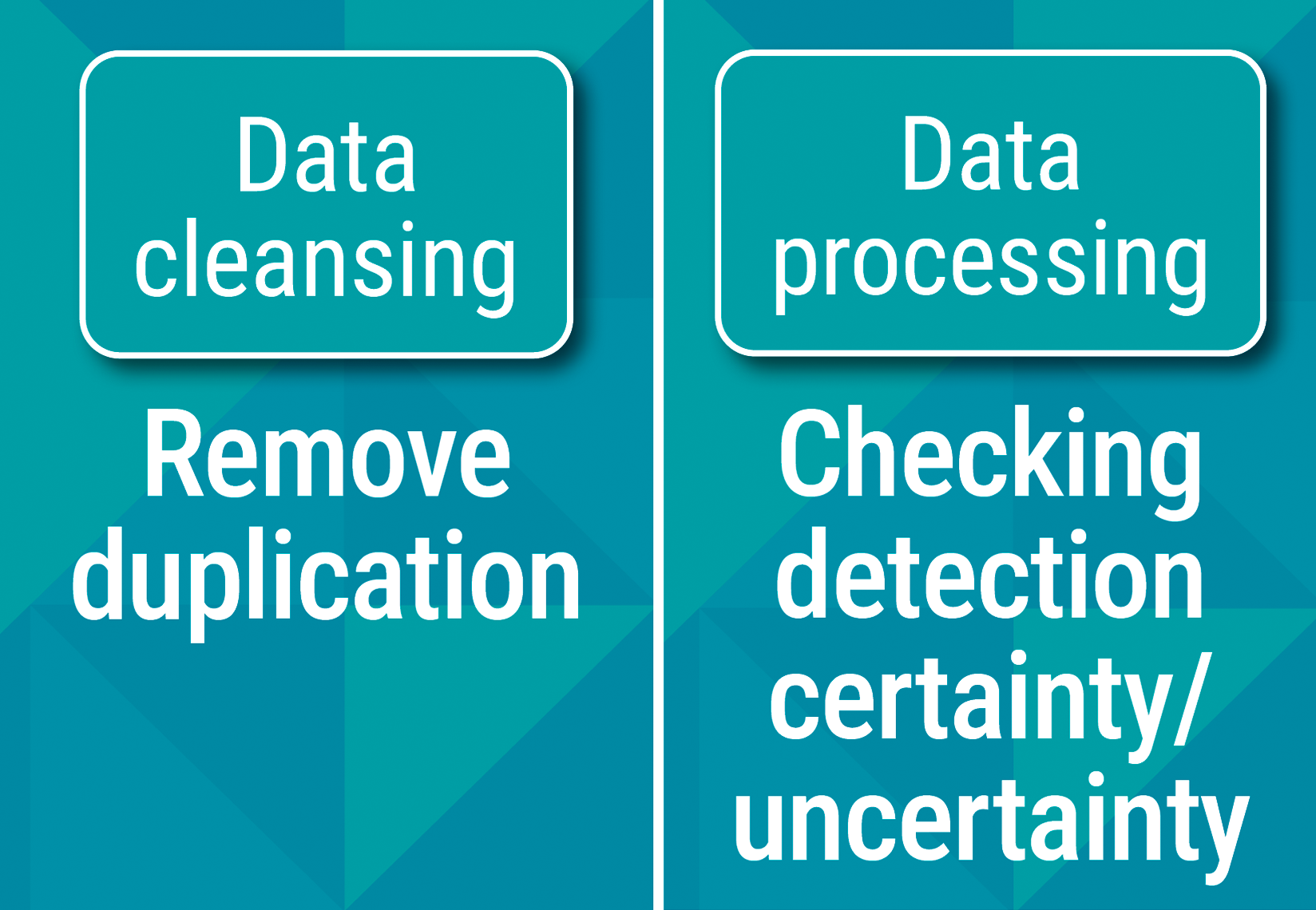
- Data cleansing removes taxonomic duplication by focusing on species-level detections, and excludes groups with limited interpretive value (e.g., most bacteria, fungi, sub-species complexes) from the main analysis, while retaining them in raw data files.
- Domain enrichment matches every taxon in your data to its full ecological profile via the Master Taxa List.
- Detection certainty evaluates each detection against three uncertainty tests, flagging results that may not represent true site-level presence.
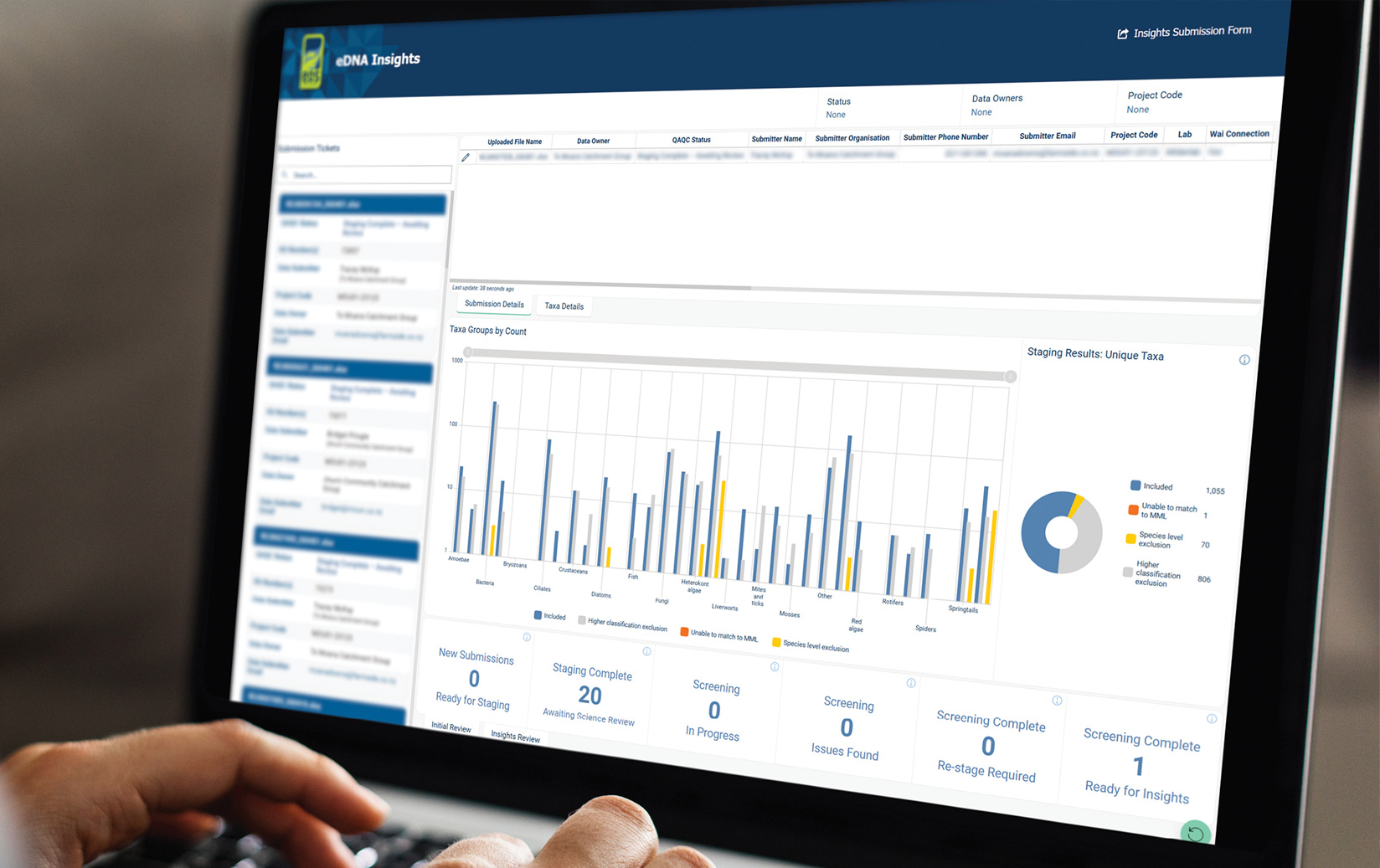
- Automated outputs are an analysis-ready Excel file (raw data, enriched columnar and matrix formats) and a web-based summary report with interactive site map, environment-type summaries, and expandable biota sections.
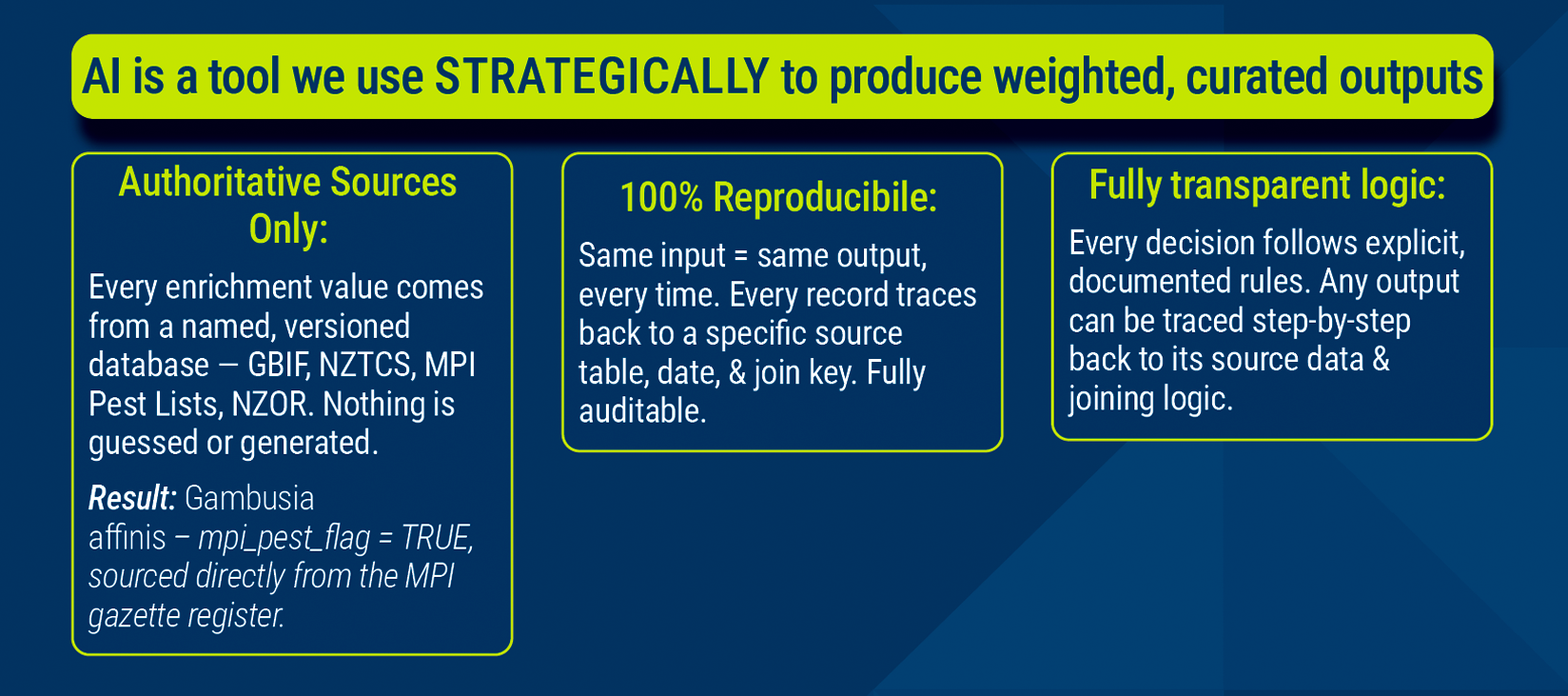
- AI assists in establishing the key environments taxa are known from – it supports workflow rather than generating underlying data. The pipeline is deterministic code; the enrichment comes from authoritative sources.

outcome
eDNA Insights™ transforms raw laboratory data into fully classified, analysis-ready ecological datasets for you. It reduces taxonomic noise, evaluates detection certainty, matches species against comprehensive ecological profiles, and cuts out hours of manual data processing. The result is two outputs:
1. An online report giving you an at-a-glance overview of the data, along with ready-to-export summary tables for each key taxa grouping.
2. An Excel file enriched with ecological classifications and formatted for immediate analysis – perfect for practitioners wanting to dive deeper into their data.
wider impact
- Democratises eDNA interpretation, making ecologically meaningful analysis accessible to everyone, including catchment groups and organisations without specialist data science resources.
- Establishes a new standard for eDNA reporting: detection to interpretation, including certainty assessment, biostatus, threat classification, pest status, habitat type, and more.
- Our Master Taxa List is a comprehensive curated ecological reference database, with applications well beyond eDNA.